

Scientists test AI-designed universal coronavirus vaccine
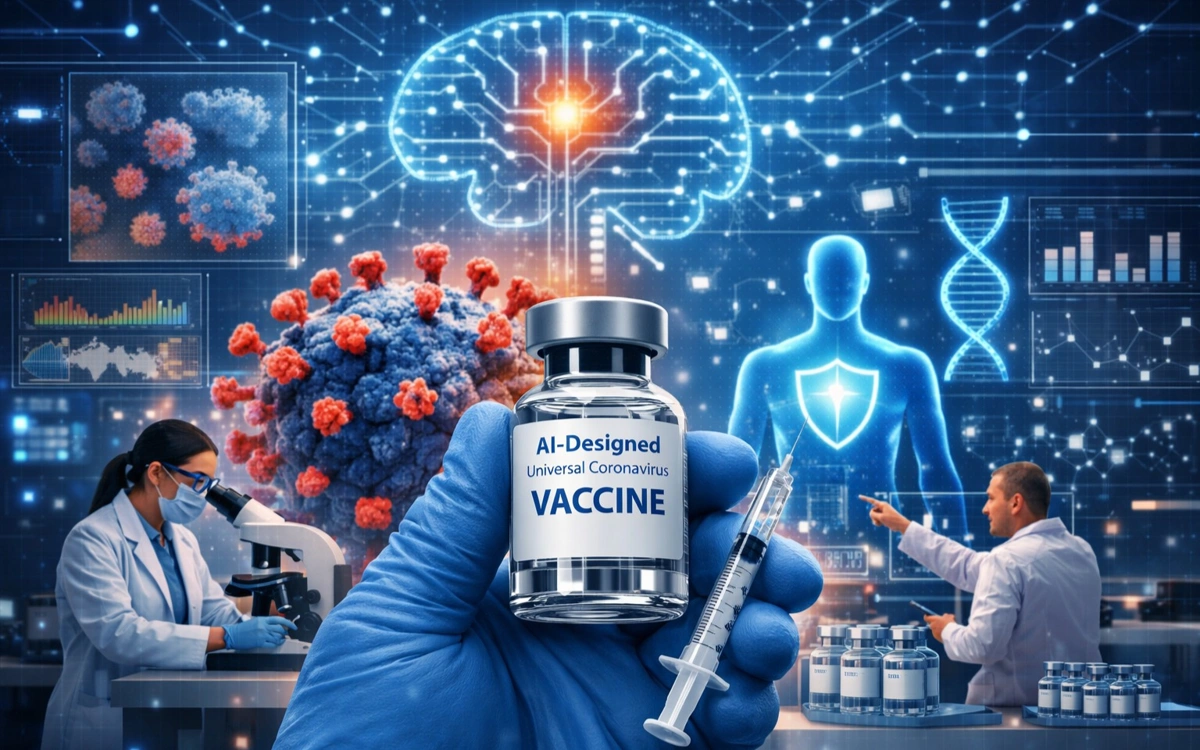
The vaccine, developed by scientists at the University of Cambridge and biotechnology company DIOSynVax, uses artificial intelligence and computer modeling to create what researchers describe as a "super-antigen" capable of targeting shared features found across an entire family of coronaviruses.
Results from the Phase 1 trial, published in the Journal of Infection, showed the vaccine was safe and well tolerated in 39 healthy volunteers aged 18 to 50. No serious safety concerns were reported during the study.
Unlike current COVID-19 vaccines, which are updated to match circulating variants, the new approach aims to provide protection against a wide range of related viruses at once. Scientists hope the technology could eventually help prevent future pandemics by preparing the immune system for viruses that have not yet crossed from animals to humans.
The experimental vaccine targets sarbecoviruses, a group that includes SARS-CoV-2, the virus responsible for COVID-19, as well as the virus behind the 2003 SARS outbreak and several related viruses found in bats. Researchers used genetic data from known sarbecoviruses to design a synthetic antigen containing features shared across the group.
According to the research team, the vaccine generated immune responses not only against SARS-CoV-2 and SARS, but also against related bat coronaviruses considered potential future threats.
Professor Saul Faust of the University of Southampton, who led the clinical trial, said such vaccines could potentially protect against both known variants and related viruses that have yet to emerge in humans.
The study also marked the first time a vaccine whose active component was designed entirely through computer simulations was tested in people. It was delivered using a needle-free jet injection device, an approach researchers say could simplify large-scale vaccination campaigns and improve access in areas where conventional injections are more difficult to administer.
While the vaccine demonstrated a strong safety profile, researchers cautioned that immune responses were modest and varied among participants. The authors noted that many volunteers had previously been vaccinated against COVID-19 or exposed to the virus, making it more difficult to assess the vaccine's full effectiveness.
The research team said further development is needed before the vaccine can be considered for public use. A larger Phase 2 trial is planned to evaluate how well it stimulates protective immune responses in a broader population.
Earlier, Qazinform News Agency reported that the scientists of the Kazakh National Agrarian Research University began Phase II clinical trials of a homegrown drug designed for immunotherapy against wormwood pollen allergy.