Sand and dust storms worsening in western Kazakhstan — Ecology Minister
A systemic threat of soil degradation and desertification persists in several regions of Kazakhstan, Minister of Ecology and Natural Resources Yerlan Nyssanbayev told the Regional Ecological Summit in Astana, Qazinform News Agency reports.
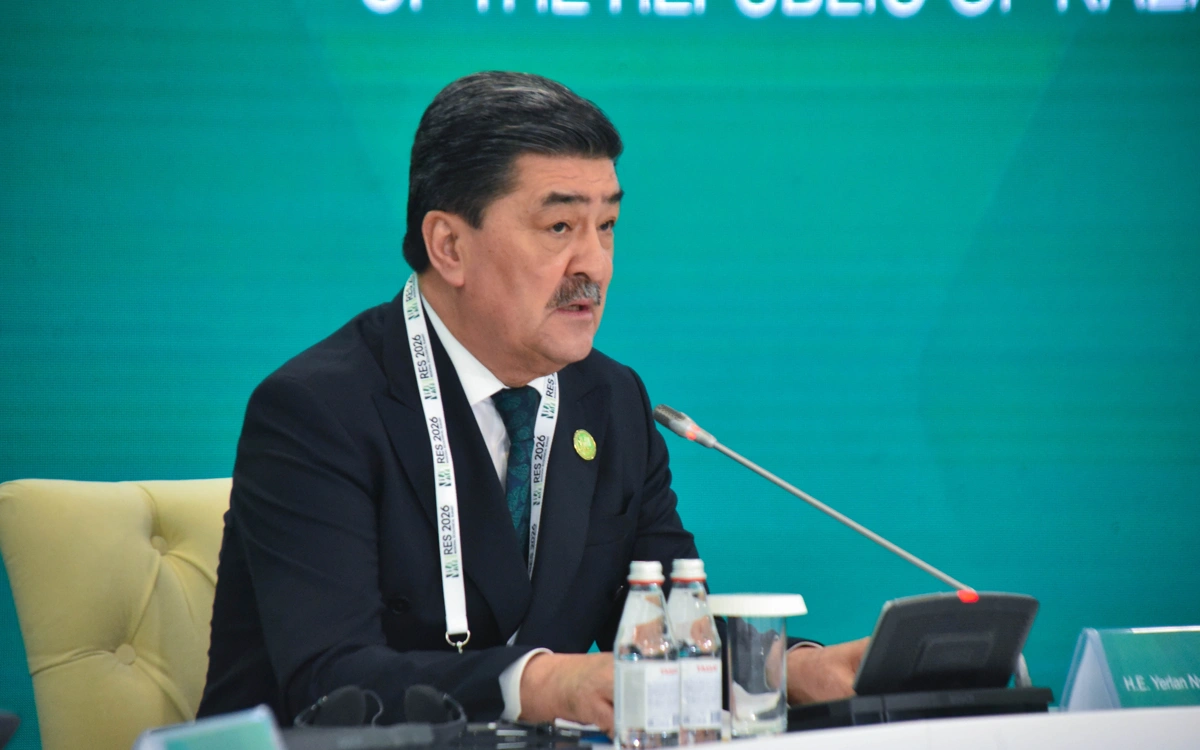
According to the minister, Kazakhstan has gained significant experience in reforestation and growing forests in challenging natural and climatic conditions.
A vivid example is the forest belt around Astana, the capital of Kazakhstan. Since 1997, a unique project has been consistently implemented there, and today the area of planted forests covers 102,000 hectares.
"This result confirms that even on previously non-forest land, ecosystem restoration is possible when based on science, long-term planning, and foresters' professional work," Nyssanbayev noted.
At the President's instruction, Kazakhstan is also implementing a large-scale greening program:
- Planting 2 billion trees in the state forestry;
- Planting 15 million trees in populated areas.
Since 2021, 1,648,000seedlings have already been planted in the state forestry. Over 18.1 million trees have been planted in populated places across the country.
The "Taza Qazaqstan" (Clean Kazakhstan) Environmental Culture Development Concept for 2024–2029 is giving additional momentum to this work, under which large-scale greening of settlements will continue.
However, according to the minister, despite the results achieved, the threat of land degradation remains systemic.
"The central, southern, and western parts of Kazakhstan are at risk of soil degradation and desertification. Sand and dust storms are becoming increasingly regular in western regions. The main hotspots are the Aral Sea region, the Moiynkum Desert, the North Caspian zone, and the Aktobe region. This shows that we face not a local problem but a spatial environmental challenge that requires long-term, systemic solutions," Yerlan Nyssanbayev stated.
Qazinform reported earlier that up to 100 mln tons of dust rise annually from the Aral Sea’s dry bed.