
S. Korea holds rates steady after consecutive increases to curb inflation
The Bank of Korea (BOK) kept its benchmark interest rate unchanged at 3 percent on Thursday, pausing its tightening cycle after two consecutive rate hikes as persistent inflationary pressures, escalating Middle East tensions and strong export growth continued to shape the economic outlook, Qazinform News Agency cites Yonhap.
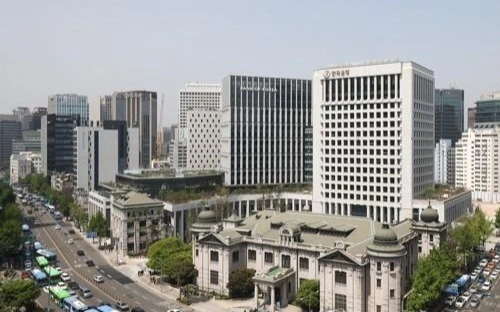
The decision by the BOK's Monetary Policy Board was widely anticipated by financial markets. The central bank raised its key rate at its July and August meetings, citing the need for preemptive action to contain rising inflation and maintain macroeconomic stability.
Those increases marked the first consecutive rate hikes since January 2023, when the central bank concluded a series of seven straight increases that began in April 2022.
The latest decision to hold rates steady reflects concerns that further monetary tightening could increase borrowing costs and place additional financial pressure on lower-income households. Nevertheless, the BOK has signaled that it intends to maintain a hawkish policy stance as inflation risks persist and economic activity remains resilient.
Consumer price inflation has remained close to 3 percent in recent months, reaching 2.8 percent in July, 3.1 percent in August and 2.9 percent in September. Inflation is expected to remain at a similar level in October, partly driven by rising oil prices amid escalating military tensions in the Middle East.
BOK Governor Shin Hyun-song has indicated that the central bank will continue tightening monetary policy until inflation is firmly on course to reach its 2 percent target.
Meanwhile, stronger-than-expected economic growth has provided further support for the central bank's cautious approach to easing monetary policy. South Korea's economy, Asia's fourth-largest, expanded by 1.8 percent in the first quarter and 0.6 percent in the second quarter.
South Korea recorded a current account surplus of 279.2 billion US dollars in the first eight months of the year, more than four times the amount reported during the same period last year.
Reflecting the improving economic outlook, the BOK raised its 2026 growth forecast to 3.3 percent from 2.6 percent in August. The economy could expand by as much as 3.6 percent, supported by robust semiconductor exports and strong demand for artificial intelligence infrastructure.
Market analysts expect the central bank to consider another rate increase at its next monetary policy meeting, scheduled for November 26.
Earlier, Qazinform reported South Korea’s exports doubled in the first 20 days of October.