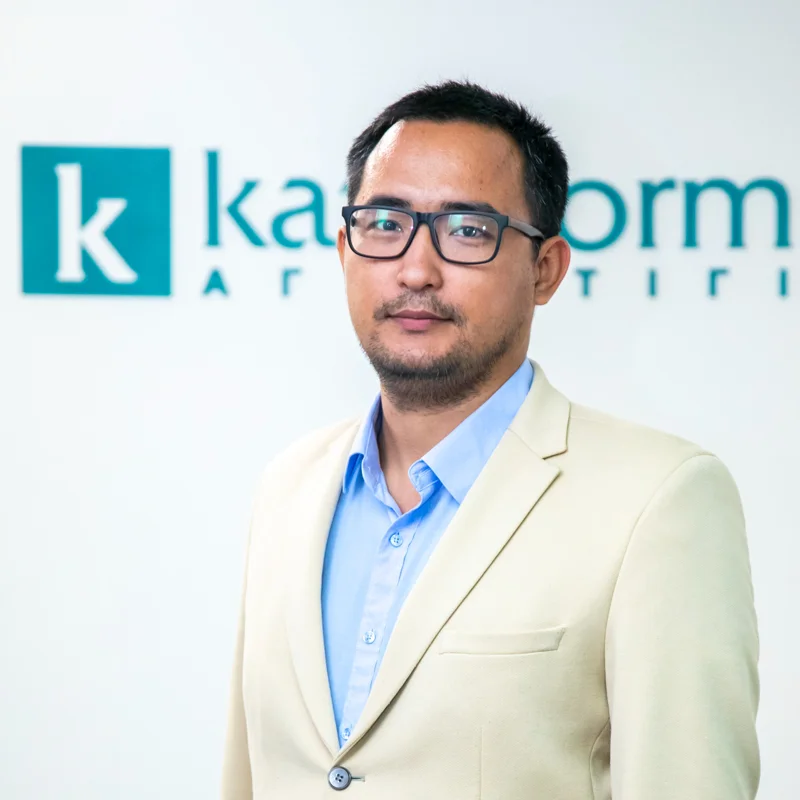
PM Bektenov calls for developing EAEU digital transport corridors
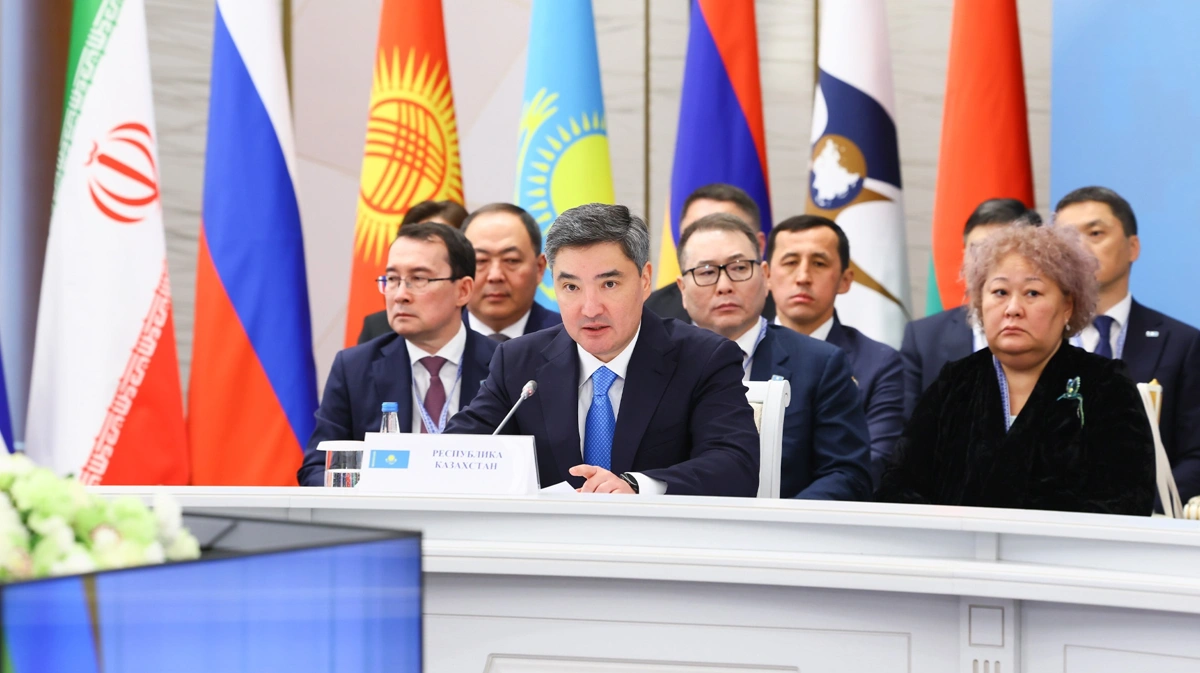
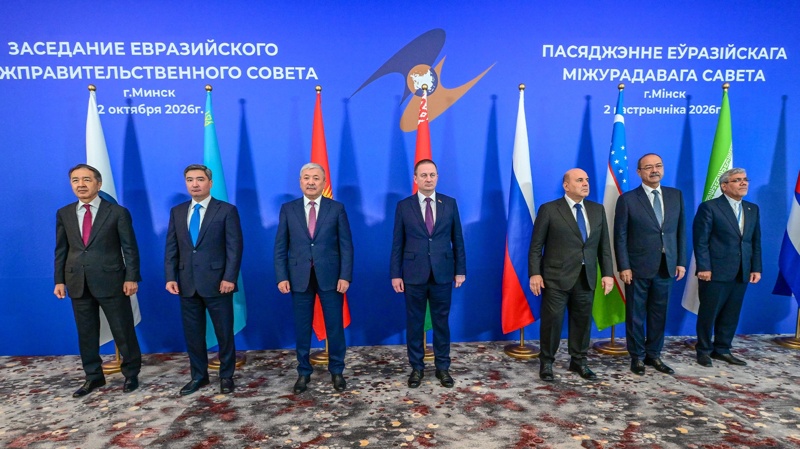
Kazakh Prime Minister Olzhas Bektenov chaired a Eurasian Intergovernmental Council meeting in Minsk, Belarus, Qazinform News Agency cites primeminister.kz.
During the Eurasian Intergovernmental Council's session, Belarusian President Alexander Lukashenko met with delegations from EAEU member and observer states, as well as the chairman of the Eurasian Economic Commission Board.
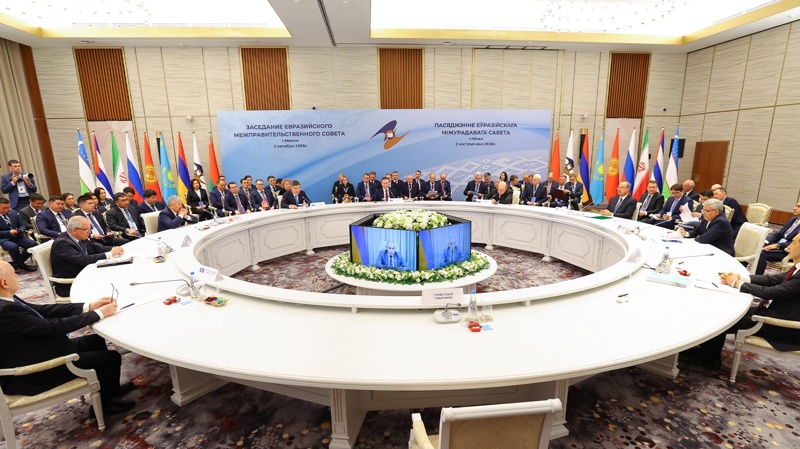
The Council meeting was held in both narrow and expanded formats. It focused on achieving the objectives set by EAEU Heads of State at the Supreme Eurasian Economic Council meeting.
"In the period Kazakhstan chairs the Eurasian Economic Union bodies, we proceed from the need for consistent implementation of the key objectives outlined by President of Kazakhstan Kassym-Jomart Tokayev in his address to the EAEU Heads of State," Olzhas Bektenov said.
"We are to discuss several issues relating to EAEU foreign trade, transport connectivity, along with individual matters raised by member states. These are important for developing national economies and improving their competitiveness. I expect today's work will contribute to further achieving the goals and objectives our Council faces."
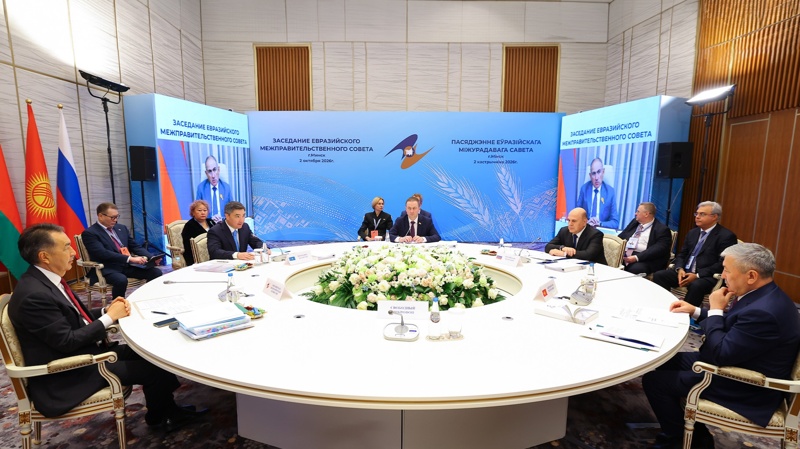
At the narrow-format meeting, participants exchanged views on a wide range of issues, including a list of top-priority integration infrastructure projects in transport and other areas of cooperation.
In the expanded format, the Council reviewed joint forecasts for agricultural development and supply-demand balances for 2026–2027, results of implementing key areas of industrial cooperation, and the status of mutual trade between EAEU member states. Participants were briefed on progress in developing electronic document flow at seaports. The Council also focused on the common electricity market and cooperation in customs administration.
The Prime Minister of Kazakhstan stressed the importance of joint efforts to maintain investment and production activity, expand economic cooperation and create new sources of growth. In the first half of 2026, EAEU gross domestic product grew 1.1% year on year. In January–June this year, fixed capital investment in current prices increased 17%, reaching $244.5 billion.
Unlocking the EAEU's transit potential was named a key factor in growing mutual trade. Olzhas Bektenov highlighted the importance of digital transformation in the transport sector and building a full-fledged ecosystem of the Union's digital transport corridors.
In Kazakhstan, the Smart Cargo single- window logistics system provides electronic cargo tracking and data exchange between government agencies and businesses. Cargo flow forecasting and route network modeling are handled by the Echelon Alpha platform, while contactless diagnostics of rolling stock is handled by KinetiX. Over the past five years, Kazakhstan's gross transport sector output has tripled, exceeding 14 trillion tenge.
In the first half of 2026, EAEU industrial output reached $938.6 billion. In the manufacturing sector, the figure reached $630.9 billion. The Prime Minister emphasized the importance of stepping up the EAEU's 2030 Main Directions of Industrial Cooperation, highlighting joint projects, new value chains and the competitiveness of member states' production sectors.
A practical mechanism of economic integration is the system of warehouse receipts for agricultural products. The agreement, which took effect in June this year, allows agricultural products to be used as collateral and to attract financing against grain and other agricultural goods. The Eurasian Economic Commission, together with member states, will ensure full practical application of this mechanism.
The meeting resulted in the signing of various documents in the trade, energy and industrial spheres, as well as a Memorandum of Cooperation between the Eurasian Economic Commission and the Eurasian Fund for Stabilization and Development.
The next meeting will take place in Moscow in December 2026.
Earlier, Qazinform reported that Kazakh Prime Minister Olzhas Bektenov held talks in Minsk during an official visit to Belarus, where he was received by Belarusian President Aleksandr Lukashenko and discussed expanding bilateral trade, investment, and industrial cooperation.