Luís de Camões at 500: Portugal celebrates a global poet in Kazakhstan
An exhibition marking the 500th anniversary of the birth of Luís de Camões opened with a speech by the Ambassador of Portugal to Kazakhstan, José Ataíde Amaral, highlighting the enduring global relevance of Portugal’s greatest poet, Qazinform News Agency correspondent reports.

Although the exact year of Camões’s birth remains uncertain, historians place it around 1524 or 1525 in Lisbon. His death on June 10, 1580 is well documented. The date is now celebrated as Portugal’s National Day.
At the heart of the exhibition is Camões’s epic masterpiece, Os Lusíadas, a sweeping poem about the voyage of Vasco da Gama to India. Drawing on the Roman name Lusitania for the region corresponding to modern Portugal, the work presents not only maritime discoveries but also Portuguese history and mythology. Through encounters such as that with the King of Malindi, in present day Kenya, the poem reflects on the nation’s past and its place in the world.
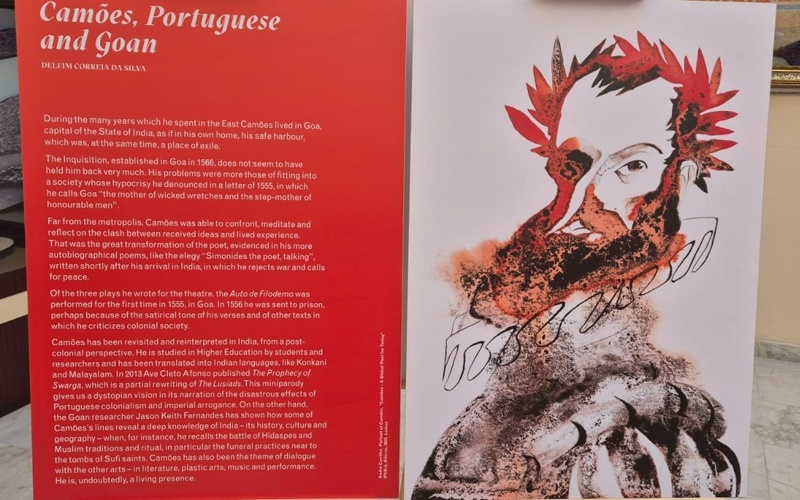
The ambassador emphasized that Camões was more than a poet of exploration. A Renaissance figure shaped by classical influences and mannerist style, he wrote lyric poetry, especially sonnets, as well as theatrical comedies. His love poetry remains especially admired. In fact, the only book translated directly from Portuguese into Kazakh is a collection of his love poems, displayed at the entrance to the exhibition.
Camões also lived an adventurous and often turbulent life. He spent nearly two decades abroad, first in Ceuta, Morocco, where he lost his right eye, and later across Asia. He lived in Goa, then the capital of Portuguese India, and in Macau, where tradition holds that much of Os Lusíadas was written in a grotto that still bears his name. His travels took him through the Mekong Delta in present day Vietnam, the Strait of Malacca, the Persian Gulf, the Red Sea, and beyond. These journeys deeply shaped his worldview and writing.
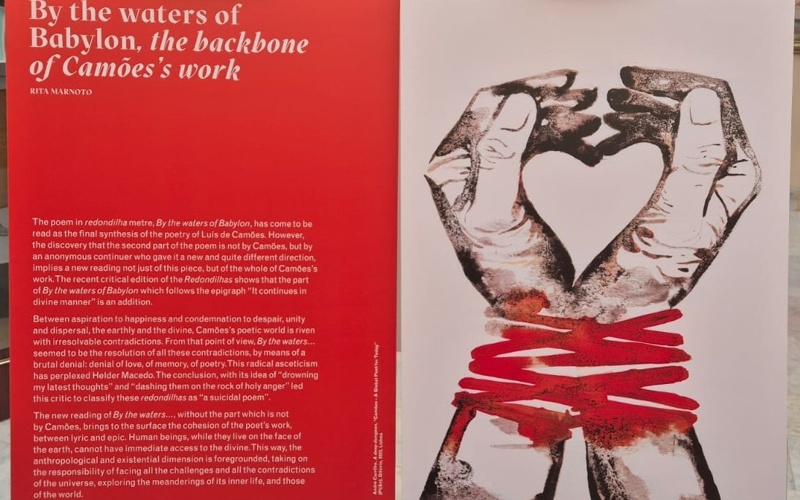
Exhibition panels explored the poet’s complexity. Scholars examined his engagement with classical models, his reflections on power and empire, and modern reinterpretations of his work, including feminist readings and postcolonial perspectives. One section highlighted how Camões balanced opposing values in what was described as a “gentle peace” between contrasts, making his work resonate across centuries and cultures.
The ambassador compared Camões to other towering figures of the 16th century, including Miguel de Cervantes and William Shakespeare, noting that while his language can be challenging, his lyric sonnets offer an accessible starting point for new readers.
Speaking with a correspondent of Qazinform News Agency, Ambassador José Ataíde Amaral advised Kazakh readers to begin their acquaintance with Luís de Camões through his lyric poetry, especially the sonnets on love, before turning to the epic Os Lusíadas, which he described as a masterpiece but more demanding for modern audiences.
He also shared his impressions of Kazakh literature, praising the philosophical depth of Abai Kunanbaiuly. The ambassador said Abai’s reflections on faith, morality and daily life were profoundly inspiring.
Earlier, Qazinform News Agency reported that Portugal joined growing EU push to tighten social media age limits.