Kazakhstan's role is growing in Tokyo's strategic outlook, says Japanese Ambassador
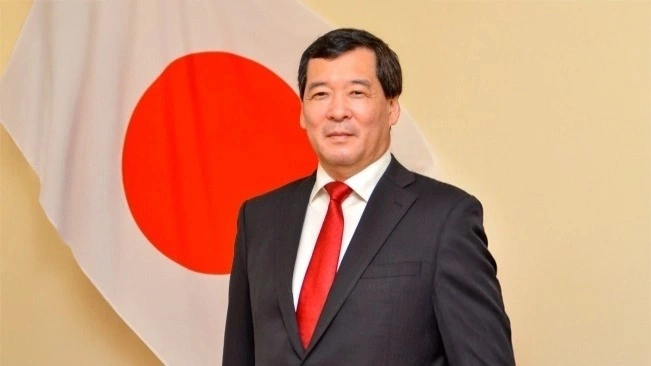
Ahead of President Kassym-Jomart Tokayev’s official visit to Japan from December 18 to December 20, growing attention is being paid to Kazakhstan's rising role in Tokyo's strategic outlook. In an exclusive interview with Qazinform News Agency, Japan’s Ambassador to Kazakhstan, Yasumasa Iijima, speaks about the future of bilateral cooperation, the development of the Middle Corridor, business initiatives, environmental challenges in the Caspian region, and joint efforts on nuclear disarmament.
President Kassym-Jomart Tokayev is planning to visit Japan from December 18 to December 20. What key issues do you believe will be discussed during the visit?
Japan and Kazakhstan are strategic partners in supporting and strengthening a free and open international order based on the rule of law. At the same time, our two countries are deepening cooperation across a wide range of areas, including economic cooperation, energy, technological innovation, and environmental issues. This visit is expected to further reinforce the existing framework of cooperation.
Discussions are likely to focus on initiatives to expand trade and encourage investment. There will also be an exchange of views on the international situation and on efforts aimed at ensuring regional stability.
Kazakhstan has abundant mineral resources and appears to be on the threshold of a historic opportunity to develop as a major transport and logistics hub of the Eurasian continent. Of particular importance is the improvement of transport connectivity within Central Asia and beyond through the implementation of the Middle Corridor transport and logistics project, as well as the strengthening of global supply chains, including the Trans Caspian International Transport Route.
What topics will be discussed at the business forum held as part of the Central Asia plus Japan summit, and what outcomes can be expected?
The business forum will focus on three main areas.
– transport and logistics
– the introduction of green solutions in the energy and industrial sectors
– the promotion of digitalization
In addition, the signing of several dozen concrete memorandums of understanding between Japanese and Kazakh companies is expected.
Japan was the first country to initiate the Central Asia plus dialogue format. What does the Central Asia plus Japan platform mean for Kazakhstan, and what concrete results can be expected from this cooperation?
In 2004, based on the understanding that intraregional cooperation is essential for Central Asia to emerge as an independent and stable region, and with strong support from Kazakhstan, Japan launched the unique Central Asia plus Japan dialogue format to promote cooperation and political dialogue. At the first meeting of this framework, President Tokayev took part as head of the delegation in his capacity as foreign minister.
For more than 20 years since its inception, this dialogue has served as a solid bridge between Japan and Central Asia, facilitating numerous political consultations and people to people exchanges. During this period, Central Asia has achieved steady economic growth, while its importance as a trade route linking Europe and Asia has increased significantly. For the first time, the Central Asia plus Japan dialogue is being held at the level of heads of state. Japan intends to continue strengthening its ties with Central Asia.
Are there plans to expand educational programs, internships, and academic exchanges for Kazakhstani specialists?
Academic exchange programs for Kazakh specialists, including opportunities to study abroad, are offered not only by universities and research institutes but also by the Japanese government.
In particular, Japan’s Ministry of Education, Culture, Sports, Science and Technology (MEXT) offers various government scholarship programs for Kazakhstanis each year.
One such program is the MEXT Researcher Internship, which allows researchers to conduct scientific work in Japan. The MEXT Teacher Internship program enables practicing teachers to train in teaching methods and improve their professional skills at Japanese universities. The Young Leaders Program offers overseas study opportunities to train future leaders drawn from promising candidates currently holding public sector positions in Kazakhstan.
The number of people studying Japanese in Kazakhstan is also growing annually. This year, participation in the Japanese Language Proficiency Test (JLPT) in Astana and Almaty reached a record high, reflecting increased interest in Japan. It also shows that research and academic opportunities for Kazakhstani students, specialists, and scholars are now available not only in Europe and the United States but also in Japan.
Academic exchange programs between the two countries have strong potential for further expansion in the future.
Japan and Kazakhstan share a common stance on nuclear disarmament. What projects could further strengthen cooperation in this area?
In Kazakhstan, where nuclear tests were conducted, many people still suffer from radiation exposure. Japan is the only country to have experienced atomic bombings during war. Drawing on its experience and expertise, Japan actively supports Kazakhstan, including through official development assistance, providing medical equipment and training for specialists.
During the visit of Japanese Foreign Minister Takeshi Iwai in August, the transfer of medical equipment to assist victims of nuclear tests was also announced. In addition, Hiroshima, Nagasaki, and the Abai region have long collaborated on addressing the humanitarian impact of nuclear weapons and providing medical support to affected populations.
Today, Japan and Kazakhstan maintain close cooperation on nuclear disarmament and non-proliferation through UN resolutions. Japan co-authored a resolution initiated by Kazakhstan on the International Day against Nuclear Tests, while Kazakhstan supported Japan’s resolution on the elimination of nuclear weapons. This collaboration is built on mutual support and shared commitment.
Earlier, Qazinform News Agency reported that Tokyo prepares for Kazakh President’s visit.