Kazakhstan's processed agricultural exports surge 35% to $3 billion
Kazakhstan's exports of processed agricultural products reached $3.04 billion in the first eight months of 2026, up 35.1% from the same period last year, Qazinform News Agency reports.
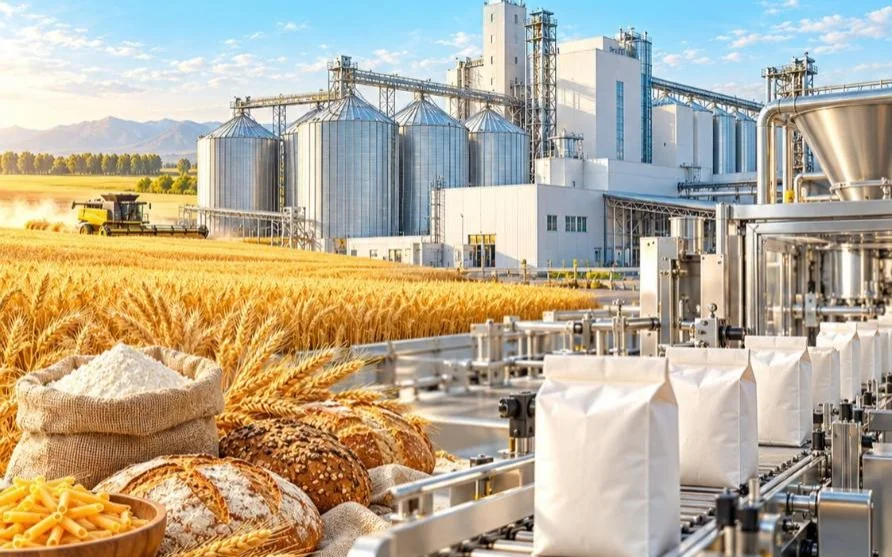
Processed products accounted for 54.1% of Kazakhstan's total agricultural export value, highlighting the country's growing focus on higher-value-added goods.
Grain processing remains a key driver of this growth, with grain and flour exports reaching a record 16 million tons in grain equivalent during the 2025/2026 marketing year.
From January to August 2026, Kazakhstan exported 1.38 million tons of wheat and wheat-rye flour, up 23% year-on-year, while export revenue rose by 36% to approximately $400 million.
The vegetable oil sector also saw strong growth, with exports of sunflower, safflower, and cottonseed oils rising by 49% to $673 million. Meanwhile, the value of rapeseed and mustard oil exports more than doubled to $90 million.
Other agricultural exports also recorded significant increases. Feed flour exports rose by 61% in value to $578 million, with shipments reaching 2.5 million tons. Beef export revenue climbed by 78% to $164 million, while volumes grew by 13% to 29,000 tons. Exports of oilseed processing byproducts, including oilcakes and meals, increased by 42% to $113 million.
To sustain this growth, the Ministry of Agriculture is providing support through preferential loans, investment subsidies, and tax incentives. Between 2024 and 2026, approximately 230 billion tenge was allocated to finance working capital for agricultural processing enterprises.
Kazakhstan is also stepping up efforts to develop advanced grain processing. The country currently has three specialized facilities with a combined annual capacity of 510,000 tons of raw materials. Over the past five years, production of starch-based products has more than doubled, while bioethanol output has reached 21,200 tons.
To further expand the industry, six major investment projects worth approximately $4 billion are underway, with a combined annual processing capacity of 5.8 million tons of raw materials. These projects are expected to boost domestic production of starch, gluten, amino acids, and bioethanol.
Progress is already being made on several facilities. The Kazkrakhmal plant, with an annual capacity to process 150,000 tons of corn, began operations in Turkistan region this year, while the first phase of Fufeng Group's production complex was completed in Zhambyl region. The Qostanai Grain Industry and Tiryaki Agro projects are also moving forward, with two more facilities planned for Akmola region.
To meet growing demand for raw materials, Kazakhstan has expanded its corn cultivation area by 60% to 106,000 hectares.
These investments, along with government support measures, are expected to increase exports of finished and advanced processed agricultural products, reduce reliance on raw material exports, and strengthen Kazakhstan's position in international markets.
Earlier, it was reported that the North Kazakhstan region received its first shipment of pedigree cattle from Australia, with 305 Aberdeen Angus animals arriving via a special cargo flight.