Kazakhstan’s elections show diversity of voters’ priorities – Norwegian academic
Kazakhstan’s first elections to the new unicameral Qurultay showed that voters have diverse priorities, ranging from geopolitics and political reform to environmental issues, Glenn Agung Hole, Associate Professor of Entrepreneurship, Economics and Management at the University of South-Eastern Norway, said during a briefing at the Center for Assistance to International Observers in Astana, a Qazinform News Agency correspondent reports.
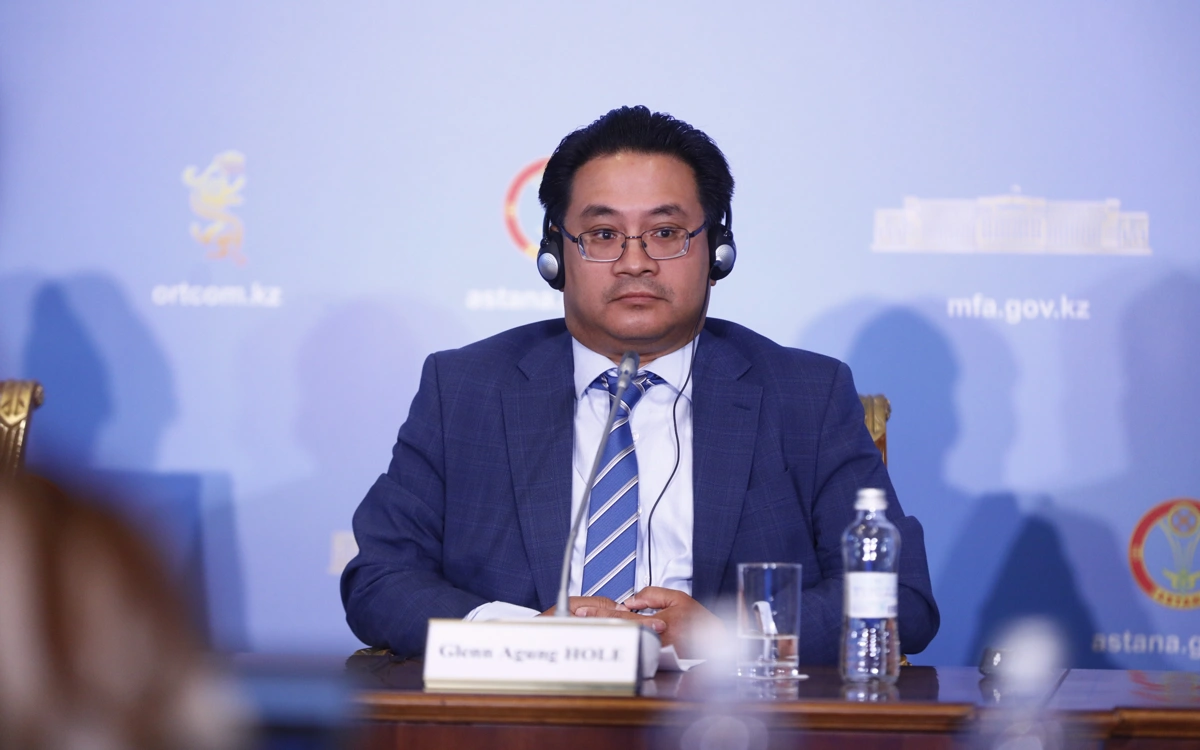
Hole, who visited several polling stations in Astana, said that speaking directly with voters was among the most valuable parts of his observation of the election.
“For me, as an academic, an institutional economist, the most valuable part was not only seeing the process; it was speaking directly with the voters. I do not see these conversations as isolated stories. They give small but valuable insight into how people understand political change in Kazakhstan’s future,” he said.
According to Hole, voters he spoke with expressed different priorities. One focused on Kazakhstan’s international relations and the importance of maintaining ties with both Eastern and Western partners while preserving the country’s independence in decision-making.
Another voter was more interested in political change and what the new stage could mean for representation and Kazakhstan’s future political development, while a third voter identified environmental issues as a key concern.
“So in a few conversations, I heard three different perspectives: geopolitics, political reforms and environment. And this is exactly why institutions matter,” Hole said.
He stressed that the role of institutions is not to make citizens think alike, but to provide different interests with a legitimate place in the political process and translate them into policy.
Hole said that observing polling stations also provided an opportunity to see how institutional processes are experienced by individual citizens.
“We often talk about institutions in abstract terms, like constitutions, law, parliament, rules. But institutions become real when citizens actually meet them. A polling station is one of those places. It is where national policy systems become a real experience for the individual voter,” he said.
He added that his main impression was that there was no single story about the election, but rather a range of perspectives among voters.
“There are many stories, and I find it generally valuable to hear those different perspectives directly from voters. As an academic, my role is to listen carefully, observe carefully, and remain independent in my analysis,” Hole noted.
Earlier, Qazinform News Agency reported that the leaders of all seven parties cast ballots in the first elections to the Qurultay.