Kazakhstan sends medical team and 319 tons of humanitarian aid to Afghanistan
A Kazakh delegation led by Deputy Prime Minister and Minister of National Economy Serik Zhumangarin has arrived in Kabul on a humanitarian and business mission. Kazakhstan has sent a humanitarian aid shipment weighing 318.8 tons to the people of Afghanistan, along with a group of doctors to provide medical assistance to the population, Qazinform News Agency reports, citing the website of the Prime Minister of Kazakhstan.

The delegation includes nine specialists from Kazakhstan’s leading medical institutions. As part of the Days of Kazakh Medicine in Afghanistan, they will spend a week conducting consultations, providing practical medical assistance to the local population, and holding master classes for Afghan healthcare professionals.
According to Zhumangarin, the humanitarian aid was sent on the instructions of the Head of State and is part of Kazakhstan’s consistent policy of supporting the people of Afghanistan.
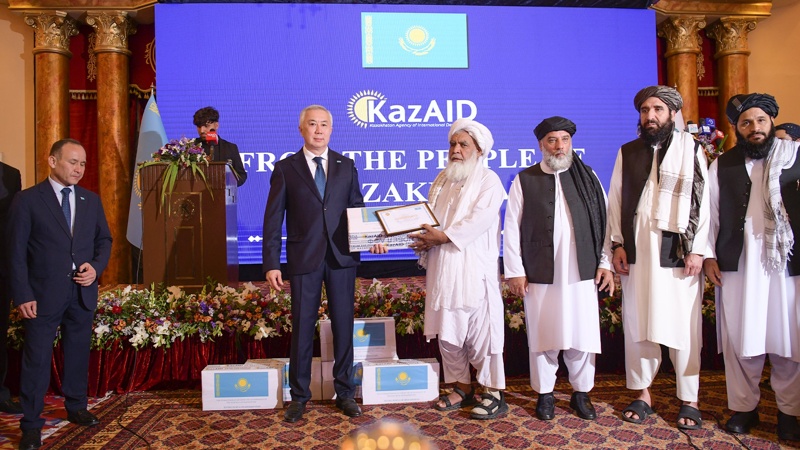
The total weight of the humanitarian cargo is 318.8 tons, including 1.867 tons of medicines and medical supplies, including antiviral, hypoglycemic, gastroenterological, cardiovascular, and bronchodilator medications, 300 tons of sugar, as well as 100 summer tents, bedding and other essential items.
The main portion of the cargo - eight railway wagons, was delivered by rail to the Hairatan station in Afghanistan’s Balkh Province. Some of the medicines arrived by air together with the delegation. The delivery of the humanitarian aid was organized by Kazakhstan’s international development agency KazAID in cooperation with the Ministries of Foreign Affairs, Emergency Situations, Health, and Transport.
“We consider Afghanistan one of our priority and strategically important partners in the South and Central Asian region. We are convinced that a stable and prosperous Afghanistan is an important prerequisite for peace and stability throughout the region. The latest shipment of humanitarian aid sent by our country is not merely an act of support, but also a demonstration of solidarity, respect, and responsibility. Today, nine leading specialists from Kazakhstan’s medical institutions have arrived with us - pediatricians, gastroenterologists, surgeons, traumatologists, and doctors from other specialties. They will provide necessary assistance to local residents and conduct master classes for Afghan professionals. For true doctors, there are no borders when it comes to saving people’s health and lives. In this way, we are continuing the medical mission that began last year, said Zhumangarin.
According to the United Nations, nearly 30 million of Afghanistan’s 45 million residents currently require humanitarian assistance. Around 1.3 million children under the age of five need treatment due to malnutrition.
Kazakhstan is the largest provider of humanitarian aid to Afghanistan among the countries of Central Asia. For more than two decades, Kazakhstan has been providing humanitarian assistance to Afghanistan, and it has done so on a continuous basis since 2021. Over the past five years, the country has delivered tens of thousands of tons of flour and food products, medicines and medical supplies, tents, household items, warm clothing, and other essential goods.
Kazakhstan’s first humanitarian medical mission to Afghanistan took place in November 2025. During that mission, 13 Kazakh doctors performed 44 operations and provided medical assistance to more than 100 patients over a ten-day period.
A major platform for coordinating international and regional cooperation will be the UN Regional Center for the Sustainable Development Goals (SDGs) for Central Asia and Afghanistan.
Earlier, Qazinform reported on June 17, 2026, the President of Kazakhstan signed the law establishing the Center in Almaty. The Center’s main objectives are to strengthen cooperation with international organizations, coordinate international and regional efforts to achieve the 17 Sustainable Development Goals, develop trade and economic ties, and attract investment.
Overall, the UN Center in Almaty could become an international platform for developing a long-term strategy for Afghanistan’s sustainable development, with the participation of the Afghan people themselves.