Kazakhstan presents its proactive economic growth strategy at meeting in Washington, D.C.
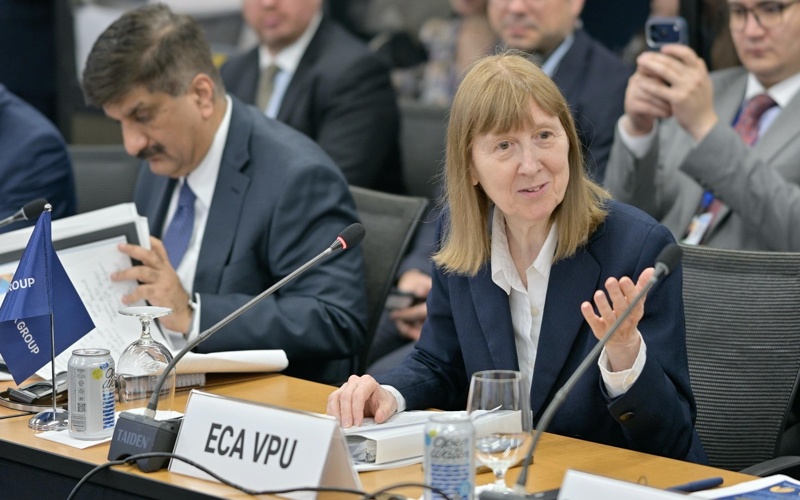
Deputy Prime Minister - Minister of National Economy Serik Zhumangarin participated in the roundtable “Kazakhstan on the Wave of Reforms” in Washington, D.C., held at the World Bank headquarters, Qazinform News Agency reports citing the Government’s press service.
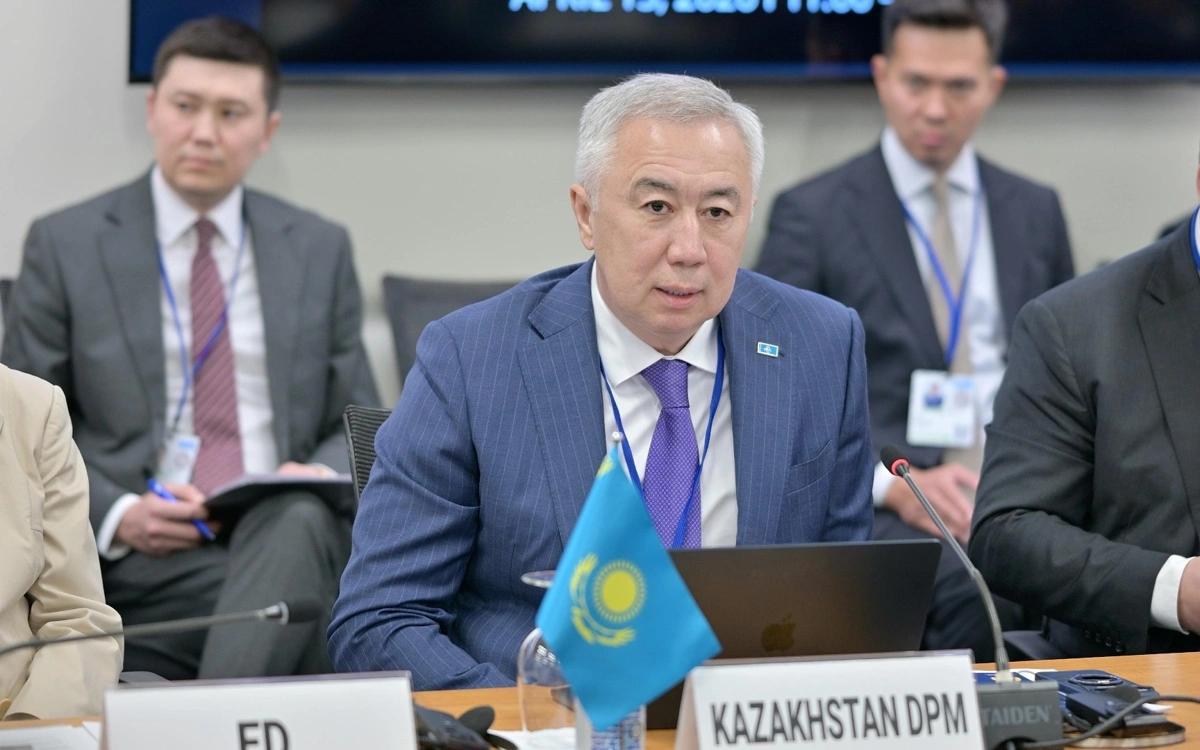
As the Vice Prime Minister noted, Kazakhstan is consistently implementing reforms in key sectors, creating conditions for sustainable and high-quality economic growth.
“We are implementing a proactive growth strategy aimed at expanding the investment base, developing new productions, and supporting export-oriented sectors. At the same time, the institutional foundation is being strengthened through reforms in the fiscal sphere, corporate sector, investment policy, and infrastructure development,” said Zhumangarin.
Presidential Advisor and Chairman of the Agency for Strategic Planning and Development Asset Irgaliyev outlined the country’s key development directions, emphasizing that the reforms are aimed at shaping a coherent and sustainable economic course. According to him, public sector plays a crucial role in implementing transformations, ensuring a systemic approach and coordination of reforms initiated at the presidential level.
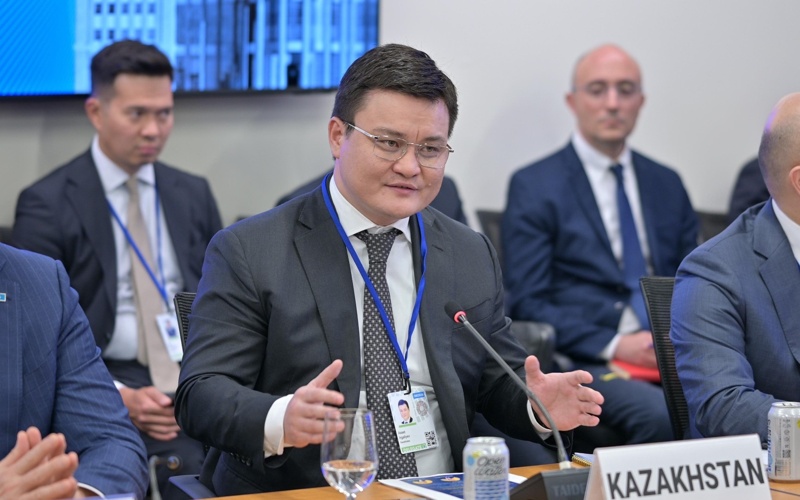
It was noted that the country’s economy continues to show steady growth. In recent years, annual GDP growth has consistently exceeded 5%; in 2025 it reached 6.5%. Production of commodities increased by 8.7%, while services sector grew by 5.2%.
Investment remains the main driver of growth. In 2025, capital investment rose by 13% to $43.6 billion (22.7 trillion tenge). Gross FDI inflow amounted to $20.5 billion (+14.4%).
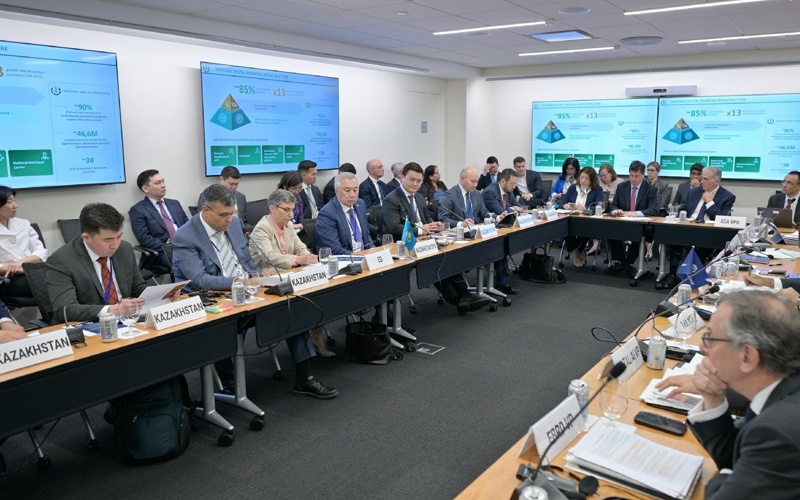
Growth continues in 2026. Despite a temporary decline in oil production due to an incident at Tengizchevroil and restrictions on the CPC pipeline, the economy expanded: in Q1 GDP grew by 3%, driven by processing sector (+8.5%), transport (+12.8%), and construction (+14.8%).
Macroeconomic stability remains strong. Since early 2025, international reserves increased by 23.8% reaching $129.5 billion, including $62.9 billion in National Fund assets.
Kazakhstan also maintains a low level of public debt: for more than ten years, the debt-to-GDP ratio has remained stable at around 25%. As of January 1, 2026, public debt stood at about $73 billion, or 22.8% against GDP.
Economic diversification is in the spotlight of the government. The new growth model strengthens the role of processing and high-tech industries. The share of processing in GDP rose from 11.3% in 2010 to 12.7% in 2025, while the share of extractive industries nearly halved - from 19.5% to 11.9%.
Kazakhstan has also improved its position in international rankings: in the Economic Complexity Index, the country rose from 87th to 55th positions between 2020 and 2024.
To accelerate investment growth, the government plans to raise the investment-to-GDP ratio to 23% by 2029. This will attract an additional $120 billion, bringing total investment to $400 billion over five years.
Priority sectors include raw material and agricultural processing, metallurgy, chemical and petrochemical industries, gas, pharmaceuticals, and high value-added agribusiness segments.
Implementation of these projects should boost labor productivity - a key factor in overcoming the “middle-income trap.”
“The proactive growth policy implies a shift from passive investment attraction to active project formation and launch. We focus on the needs of specific industries and attract strategic partners with technology and expertise,” noted the Vice Prime Minister.
Under this policy, 12 directions have been identified in the food sector and 24 in the non-food sector. The overall portfolio includes 274 projects worth more than 700 billion tenge.
Special attention is given to the development of Alatau city, which will become a new growth hub with a special management regime and its own financial model. The city will introduce tax incentives, a “one-stop shop” principle, international standards, and enhanced guarantees for investors.
By 2050, this will allow to raise the region’s GRP by $40-50 billion, raise the population to 1.8 million, and create about one million jobs.
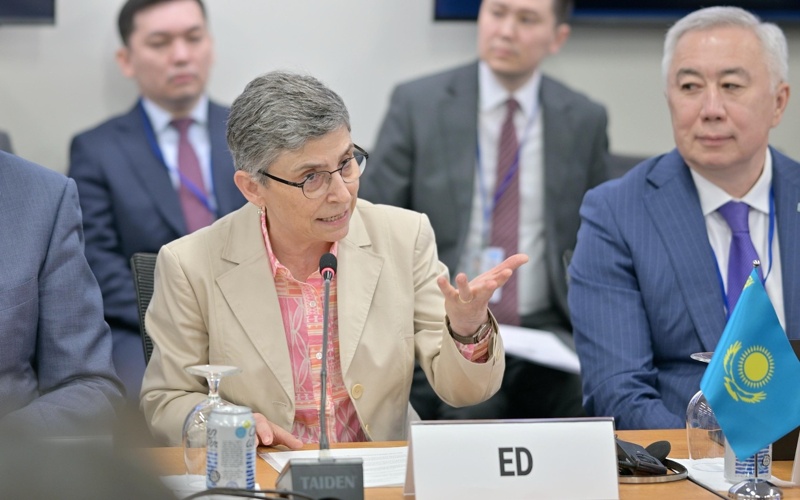
World Bank representatives supported the ongoing reforms, while noting the importance of balancing growth rates with economic capacity, as well as considering productivity dynamics and inflation risks.
Earlier, it was reported that Kazakhstan's Deputy Prime Minister and Minister of National Economy Serik Zhumangarin met in Washington, D.C., with Antonella Bassani, World Bank Vice President for Europe and Central Asia, along with representatives of the World Bank Group,