Kazakhstan, Iran vow to boost development of transport corridors, ports
Kazakh Deputy Prime Minister and Minister of National Economy Serik Zhumangarin held a bilateral meeting with an Iranian delegation led by Minister of Roads and Urban Development Farzaneh Sadegh, Qazinform News Agency cites primeminister.kz.
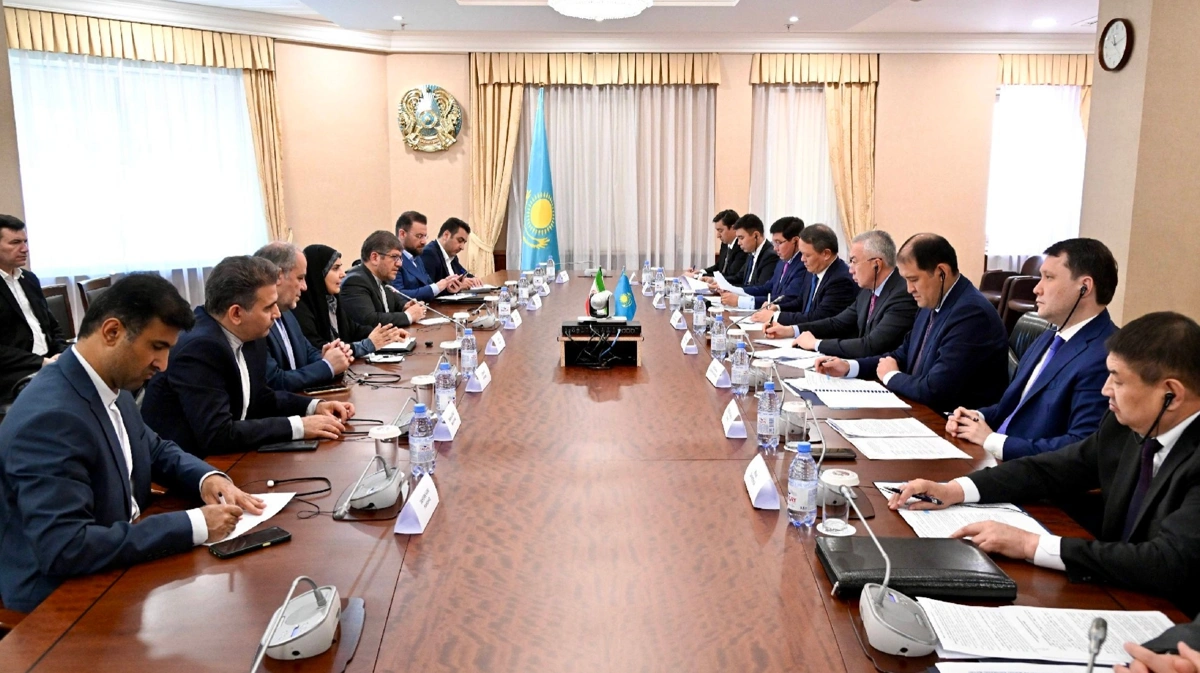
The sides discussed implementing agreements reached by the heads of state during the Iranian President's official visit to Kazakhstan in December 2025, developing the International North–South Transport Corridor, expanding port infrastructure, increasing mutual trade, and improving transport and logistics links between the two countries.
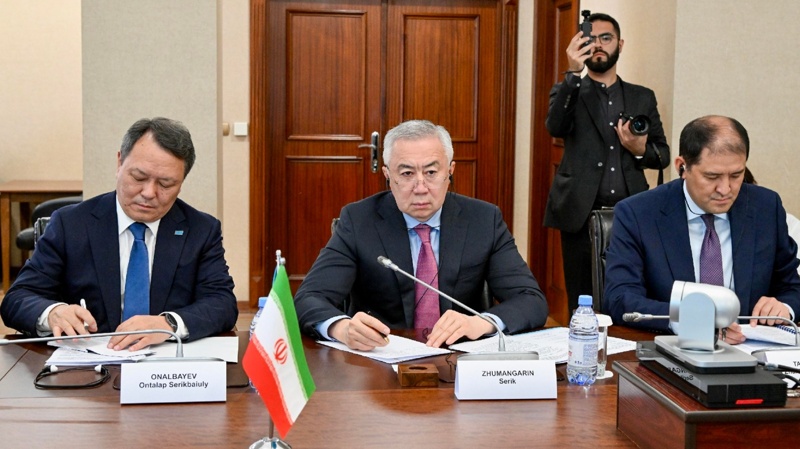
Opening the meeting, Serik Zhumangarin emphasized that Iran is one of Kazakhstan's key trade and economic partners in the region.
"Strengthening cooperation is a strategic objective set by our heads of state. In 2025, trade turnover between Kazakhstan and Iran rose by 26.4 percent, reaching $430.2 million. This reflects the substantial potential for further expansion, including under the roadmap to increase mutual trade to $3 billion and owing to the Iran-EAEU Free Trade Agreement," Zhumangarin said.
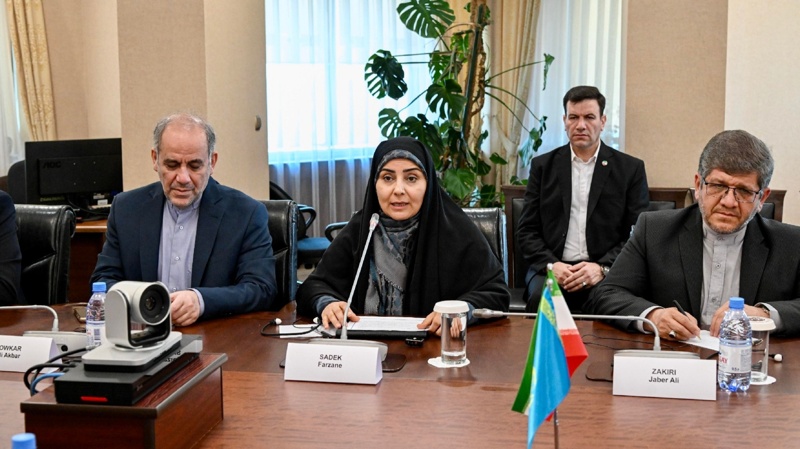
Farzaneh Sadegh emphasized that her visit is aimed at the practical fulfillment of previously reached agreements and bolstering transport and logistics cooperation, which is of particular importance for both countries amid current geopolitical processes.
Special attention was paid to the development of the International North–South Transport Corridor. Kazakhstan and Iran have a unique geographical position at the intersection of the North-South and East-West routes, creating significant potential for transit growth.
In 2025, freight volume along the North-South corridor climbed by 12 percent, reaching 3.5 million tons. Rail freight between the two countries grew by 69 percent.
To further unlock the route's potential, Serik Zhumangarin proposed developing a joint roadmap for modernizing transport infrastructure. Implementing a set of measures will help increase the corridor's annual capacity to 20 million tons.
The sides also highlighted the importance of the signed five-party railway agreement between China, Kazakhstan, Turkmenistan, Iran, and Türkiye, as well as the upcoming signing of a four-party tariff agreement between Kazakhstan, Russia, Turkmenistan, and Iran, which will create additional conditions for trade and transit growth.
One of the key topics was port infrastructure development. The Iranian side reported that it had finalized the allocation of a land plot for Kazakhstan in the Port of Shahid Rajaee (Bandar Abbas). Once the necessary procedures are completed, the plot will be handed over to Kazakhstan.
Iran also confirmed its readiness to provide Kazakhstan with opportunities to operate in Chabahar Port, which provides direct access to markets of South and Southeast Asia.
According to Sadegh, the construction of the Chabahar–Zahedan railway is more than 90 percent complete, with the launch scheduled for the coming months. When the line opens, Chabahar Port will be integrated into the international railway network linking the Indian Ocean, Central Asia, and Europe.
In response, Kazakhstan confirmed its readiness to consider providing Iranian companies with port space, berths, and terminals in the ports of Aktau and Kuryk for logistics activities on the Caspian Sea.
Following the meeting, the sides reaffirmed their intention to accelerate the implementation of agreements reached at the summit level, ensure coordinated efforts to attract investors, and intensify the development of transport and logistics infrastructure.
As Qazinform previously reported, Kazakhstan and Iran discussed multilateral cooperation, regional issues.