Kazakh-UK relations: state and new points of growth of cooperation
Current state of bilateral relations
Diplomatic relations between Kazakhstan and the United Kingdom were established one month after Kazakhstan announced its independence - on 19 January 1992. Since then, the two countries have been actively working to develop political, economic and cultural ties.
Today the UK is a key trade and investment partner of Kazakhstan in Europe. In the near future, the parties will sign a new generation document - the Strategic Partnership and Cooperation Agreement, which will further strengthen the multifaceted relations between the countries.
«The Strategic Partnership and Cooperation Agreement will provide a basis for expanded cooperation and an opportunity to refresh our approach to trade with Kazakhstan. It will underscore our ability to trade together though enhanced cooperation by establishing dialogues,» HM Trade Commissioner for Eastern Europe and Central Asia Region Kenan Poleo told Kazinform.
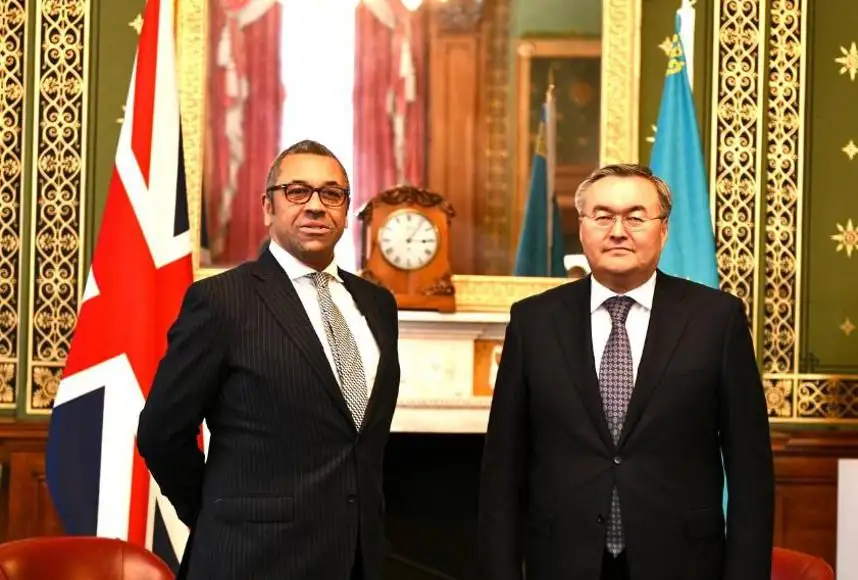
It should be noted that a number of high-level mutual visits took place this year. In March, Foreign Minister James Cleverly visited Astana, in June Parliamentary Under Secretary of State Leo Docherty paid a visit, and a month earlier, senior British parliamentarians visited Kazakhstan as well. In turn, Chairman of the Majilis Yerlan Koshanov represented Kazakhstan at the coronation of HM King Charles III in May.
Kazakhstan is a key partner for the UK
«The UK has long recognised Kazakhstan as a key partner in Central Asia. Shell and BG as key stakeholders in the oil and gas projects; British Council, Bolashak and key universities like UCL, LSE and University of Cambridge – all of these partnerships have been important pillars over the past 30 years,» British Ambassador to Kazakhstan Kathy Leach told Kazinform.
«Today Kazakhstan is a key partner on a range of important issues, including on education, energy, critical minerals and climate change, and defence and security. Kazakhstan is the UK’s most important economic partner in Central Asia,» a high-ranking British diplomat added.

«The trading relationship continues to grow strongly – as well as being a top six investor, total trade is now worth almost £3 billion per annum, with the UK importing significant volumes of goods from Kazakhstan, helping to create and support local jobs,» she says.
UK supports President Tokayev's reforms
The UK has signalled its support for the political and socio-economic reforms being implemented in our country to build a Just Kazakhstan.
«The Foreign Secretary expressed support for the political and socio-economic reforms being carried out in Kazakhstan aimed at building a fair state, a fair economy and a fair society,» the foreign ministers of the two countries said in a joint statement in December.

«Today, when Kazakhstan is undergoing quite a transformation with major political, social-economic reforms, and first and foremost democratic reforms initiated by President Tokayev, such support on behalf of the United Kingdom is very much meaningful,» Kairat Abdrakhmanov, the OSCE High Commissioner on National Minorities, added during his speech at a webinar on Kazakh-British relations.
«Having friends in the international arena, who understand and support this process of Kazakhstan’s transformation, is probably the most significant factor for the success of these reforms in the long term,» the senior international official added.
Cultural and humanitarian ties
Cultural and humanitarian co-operation between the two countries has also received additional impetus in recent years. In 2021, a campus of the British De Montfort University started operating in Almaty, and a branch of the Scottish Heriot-Watt University in Aktobe will open its doors this autumn.
The opening branches of British universities bring Kazakhstan closer to its ambitious goal of creating an academic hub in our country, which is designed to attract young people from neighbouring regions with a total population of about 2 billion people.

In addition, the British Foreign Office's prestigious Chevening scholarship programme for young professionals seeking a master's degree in the UK is being increased by 20% this year.
On top of that, there will be new special scholarships for women in science, technology, engineering and maths (STEM), the UK Embassy in Astana told Kazinform.
New points of growth in bilateral cooperation
«Education, finance, research and energy will be the key areas to develop the relations. Such partnerships must include developing new technologies in cooperation as well as technology transfer,» Murat Coskun, a researcher at the Turkish University of Giresun, who studies European politics, notes.
In his opinion, deepening Kazakhstan's partnership with the UK in these areas will not only improve Astana's contacts with the European Union, but will also allow it to take a more favourable negotiating position in relations with China, one of the main economic giants.
«Establishing such partnerships with the UK can pave the road to establish similar partnership with other Western countries as well as the EU. This is especially important considering the EU is more restricted with its norms and regulations and a proven working partnership with the UK can make the EU’s decision easier,» Murat Coskun explains.
A promising area of trade and investment partnership between the two countries could be the joint extraction and processing of critical minerals, which British industry currently lacks.
Jeff Townsend, co-founder of the Critical Minerals Association, speaking at the recent Kazakhstan-Britain Business Forum, described Kazakhstan as a «good market to operate in» with a stable government system that is increasingly democratic and huge infrastructure investment that underpins the nation providing 60% of regional GDP.
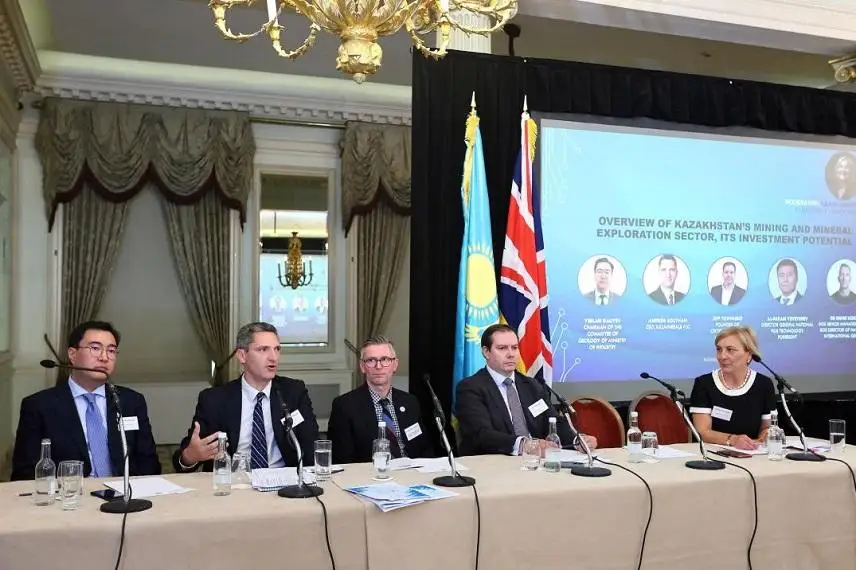
According to him, out of the required 18 critical minerals identified by the British Geological Survey, Kazakhstan has four in production (bismuth, gallium, rare earth elements, silicon), and 10 elements have been explored (vanadium, tungsten, tin, tantalum, niobium, magnesium, lithium, indium, graphite, cobalt).
At the same time, the Ambassador of Kazakhstan to the UK, Magzhan Ilyassov, noted for foreign partners that the greatest support will be given to those British companies, which invest in the production of high-value-added products.
«Middle Corridor» and easing visa requirements
At the G7 summit in May, the leaders of the forum's member countries expressed their determination to develop the «Middle Corridor» and associated projects to enhance regional prosperity and resilience in Central Asia.
«The «Middle Corridor» Trans-Caspian Transport project, could help improve trade resilience by improving connectivity from across the region through to Türkiye and beyond. This is an opportunity for the UK to both facilitate investment in infrastructure, and also support political agreement to create predictable economic logistics pathway for Central Asia,» HM Trade Commissioner for Eastern Europe and Central Asia Region Kenan Poleo noted.
At the same time, an important item on the bilateral agenda is the issue of easing visa requirements for citizens of Kazakhstan, which reflects the UK's readiness to develop open relations, thereby creating a favourable basis for human contacts and business development.
«The issue of visa facilitation with the UK for citizens of Kazakhstan is on the agenda. We raised this issue in December during the Foreign Minister's visit to London, then in January at the intergovernmental commission. In autumn we will raise it again as part of inter-ministerial political consultations,» Magzhan Ilyassov told Kazinform.

However, this complex issue falls within the competence of the UK Secretary of State for the Home Department Suella Braverman, who is known for her tough approach on migration issues.
Nevertheless, almost ten years ago Kazakhstan decided to unilaterally establish a visa-free regime for citizens of the UK. Now it is London's turn to act on the visa issue and demonstrate how far British partners are willing to go in co-operation with Astana.
By Timur Dyussekeyev