How to stay safe during an attack on a plane
A security incident on board an aircraft can develop within seconds, while passengers have limited space to move and little information about what is happening. Qazinform News Agency explains how to act during an attack or other violent security incident on a plane and what mistakes should be avoided.

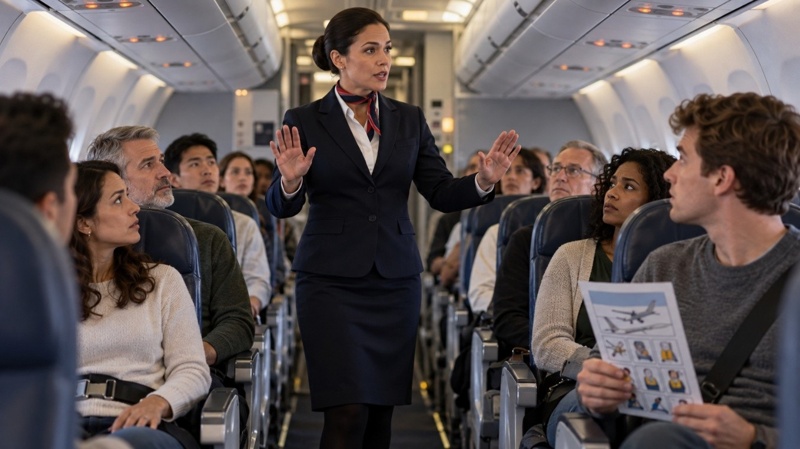
Follow the crew's instructions
In an emergency on board, the first priority is to listen to the pilots and cabin crew.
Flight attendants are trained to respond to emergencies and may have information passengers do not, including what is happening elsewhere in the aircraft and whether it is safe to move through the cabin.
If the crew tells passengers to remain seated, stay in your seat. If they instruct you to move, evacuate or assist, follow those directions promptly.
Do not rush toward the threat
A passenger should not approach an attacker simply to find out what is happening or attempt to intervene without understanding the situation.
In the confined space of an aircraft, unnecessary movement can obstruct the aisle, interfere with cabin crew and expose more people to danger.
General FBI guidance for active shooter incidents recommends getting away from the threat when possible, finding protection when escape is impossible and physically resisting only as a last resort when there is an immediate threat to life.
On an aircraft, however, options are much more limited. Moving away may mean remaining seated, changing rows only when directed, or keeping clear of an area where crew members are responding.
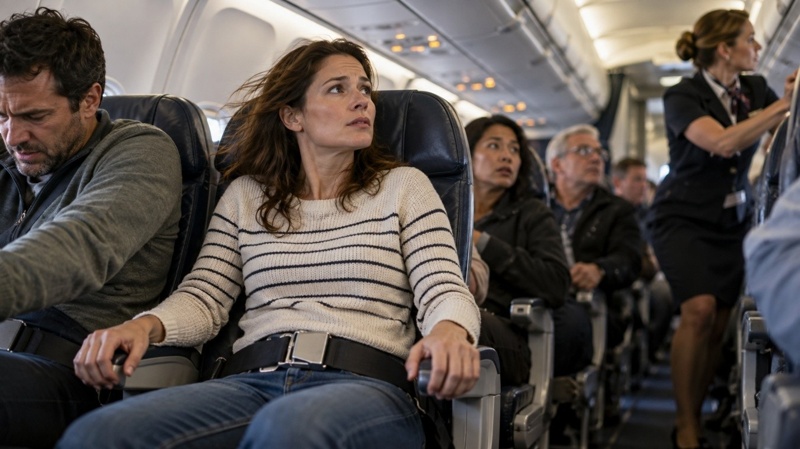
Keep your seat belt fastened
An attack or other security incident may be accompanied by sudden maneuvers, rapid changes in altitude or an emergency landing.
The FAA recommends keeping a seat belt fastened whenever a passenger is seated, even when the seat belt sign is off. A properly fastened seat belt can protect passengers from being thrown from their seats during unexpected aircraft movement.
If an incident begins while you are seated and there is no immediate threat next to you, remaining belted may therefore be safer than standing in the aisle.
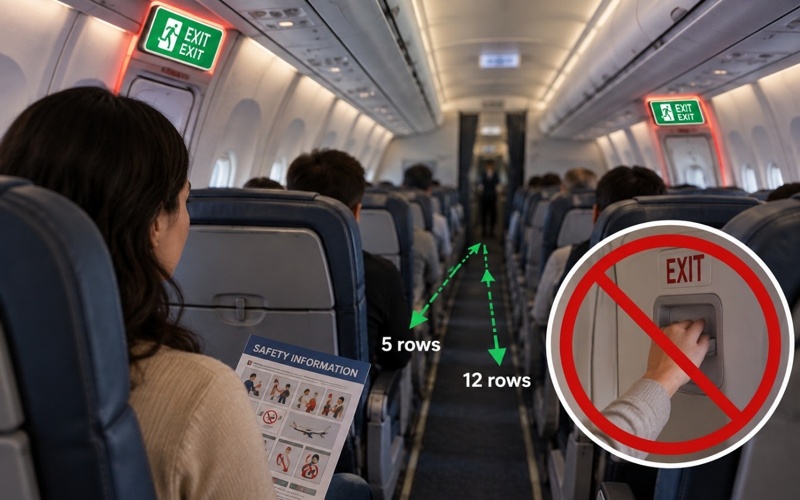
Know where the exits are, but do not open them on your own
Before takeoff, passengers should identify the nearest emergency exit both in front of and behind their seat. The FAA even recommends counting the number of rows between the passenger and the exits, since visibility may be limited during an emergency.
Knowing where an exit is does not mean attempting to use it without instruction.
During an emergency, passengers should follow the cabin crew's directions about which exits can safely be used. Conditions outside one side of an aircraft may make a particular exit dangerous.
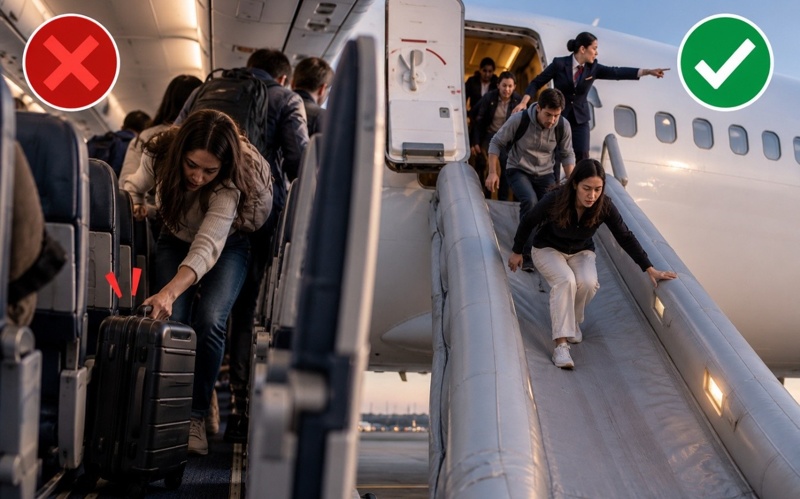
If evacuation is ordered, leave everything behind
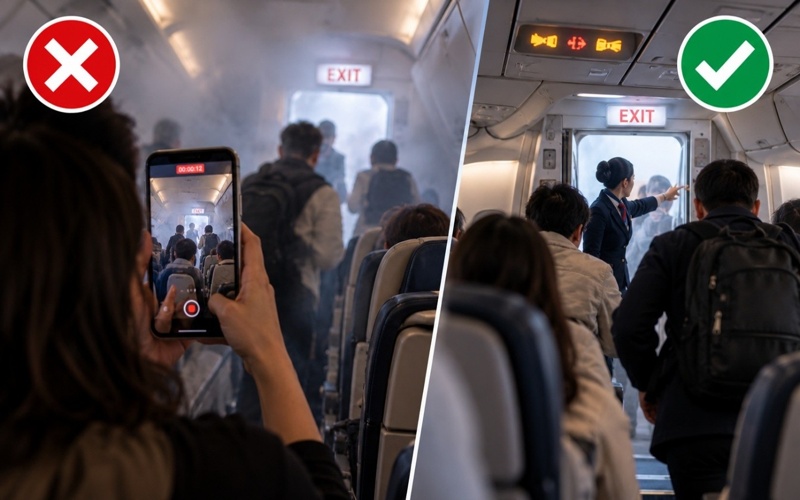
One of the most important rules during an aircraft evacuation is simple: do not take your luggage.
According to the International Air Transport Association, passengers stopping to retrieve suitcases, backpacks or other belongings can block aisles and emergency exits, delay people behind them and even damage evacuation slides.
The FAA advises passengers to leave all carry-on baggage behind, move quickly to the nearest safe exit and keep the evacuation moving.
Important items such as identification, essential medication or keys can be kept in a pocket during a flight when practical, so there is no need to search for them during an evacuation.
Do not stop to film
Taking out a phone may feel instinctive during an unusual event, but an emergency is not the time to record what is happening.
Both the FAA and IATA advise passengers not to stop to take photographs or videos during an evacuation. Filming can distract a passenger, obstruct movement and waste seconds that may be critical.
The same principle applies during an ongoing security incident. Unless a phone is needed to communicate important information and doing so is safe, attention should remain on the surroundings and crew instructions.
Help injured people when it is safe
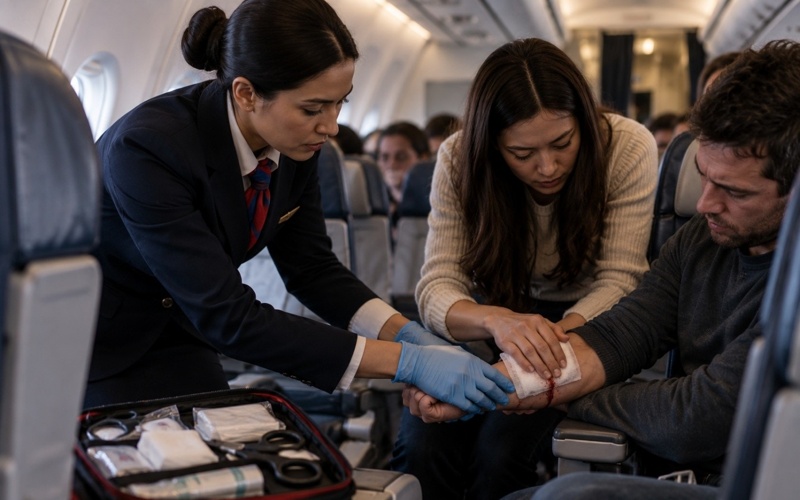
Once the immediate threat has been controlled, passengers may be asked to assist an injured person.
In cases of severe external bleeding, the American Red Cross recommends applying firm and continuous direct pressure to the wound. A tourniquet may be used for life-threatening bleeding from an arm or leg when one is available and the person knows how to use it.
However, a passenger should first make sure that approaching the injured person does not place them in immediate danger.
There is no single response that applies to every security incident in the air. The nature of the threat, the location of the attacker, the condition of the aircraft and instructions from the crew can all change what the safest action is.
The basic principle remains the same: stay aware of what is happening, follow the crew, avoid unnecessary movement and intervene physically only when there is an immediate threat to life and no safer option.
Earlier, Qazinform News Agency reported that on September 30, flydubai flight FZ1073, travelling from Dubai to Tel Aviv, was diverted to Tabuk, Saudi Arabia, following an altercation in the cockpit. Crew members travelling on board intervened and helped secure the aircraft, which landed safely.
The UAE Attorney-General later ordered an investigation into the circumstances and motives behind the incident. Authorities are examining, among other possibilities, whether it was connected to terrorist activity or intent and whether it involved prior planning or direction. No final conclusion on the motive has yet been announced.