From peace to elephants: five most unique Christmas gifts in history
While modern Christmas gifts can sometimes appear extravagant, history offers examples that were far larger in scale and meaning. On Christmas Day, Qazinform News Agency looks into five of the most unusual Christmas gifts in history, illustrating how festive gestures have, at times, taken on artistic, political, and symbolic significance.

Salvador Dalí’s harp
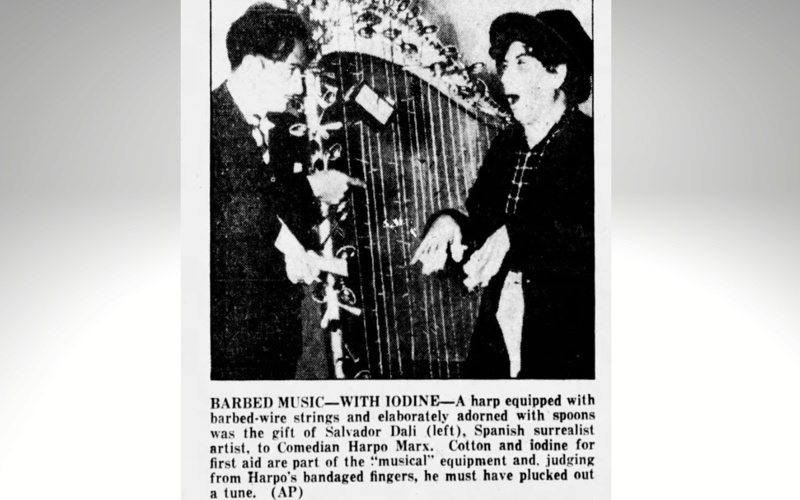
Musical instruments are not uncommon gifts, but in the hands of Spanish surrealist Salvador Dalí, a harp became an artistic statement. Dalí was a long-time admirer of American comedian and musician Harpo Marx, whom he publicly described as one of the key figures aligned with surrealist ideas.
The two artists met in 1936, later becoming friends based on mutual admiration. That Christmas, Dalí sent Marx a full-sized harp altered with non-traditional materials, including cutlery fixed to the frame and strings replaced with barbed wire, transforming the instrument into a visual artwork rather than a playable one.
The gift later became part of the documented exchanges between the two artists and reflected Dalí’s broader approach to blurring the line between everyday objects and art.
The gift of ‘Liberty’
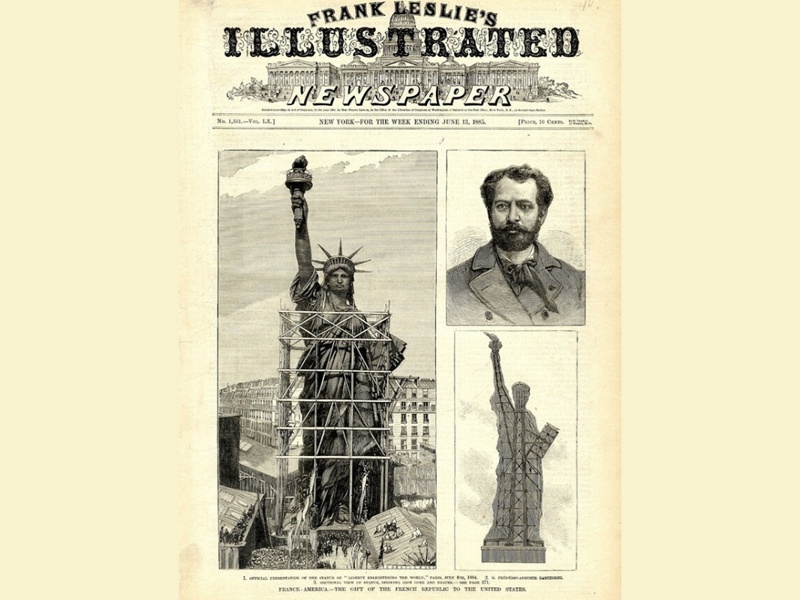
One of the most ambitious gifts in modern history originated in France in the mid-19th century. In 1865, French political thinker Édouard de Laboulaye proposed gifting a monument to the United States to mark the approaching centenary of American independence and to reaffirm ties between the two republics.
The statue was designed by sculptor Frédéric Auguste Bartholdi, with an internal iron framework created by engineer Gustave Eiffel. The structure was transported to New York in sections in 1885 and assembled on Bedloe’s Island, now Liberty Island.
Although formally unveiled in October 1886, the statue has long been regarded as a symbolic Christmas-era gift from France. At 305 feet tall from ground to torch, it remains the largest and most enduring example of a gift between nations.
The Christmas Truce of 1914
Not all Christmas gifts take physical form. During the first Christmas of World War I, unofficial ceasefires occurred along sections of the Western Front, stretching from Belgium to northern France.
In December 1914, soldiers from opposing sides temporarily suspended hostilities, allowing them to recover fallen troops, exchange greetings, and, in some documented cases, share food and small personal items. Historical and military records confirm that carol singing and informal conversations took place between enemy lines.
Although the truce ended within days as military operations resumed, the event has remained a powerful historical episode.
A city for the President
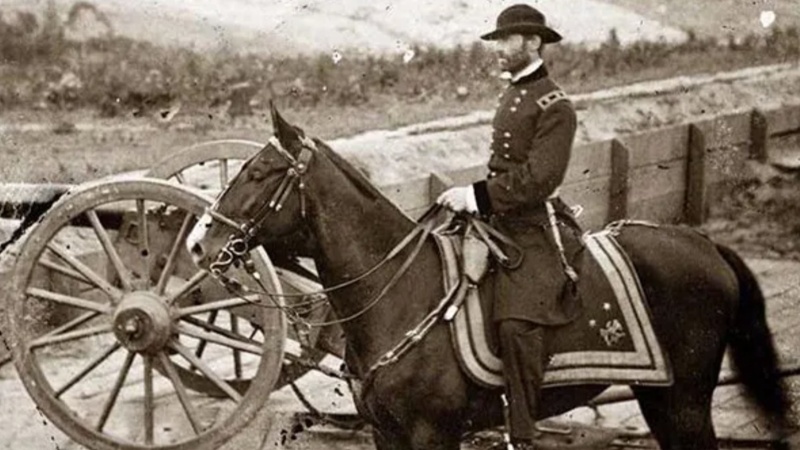
In December 1864, during the American Civil War, Union General William Tecumseh Sherman sent an unusual Christmas message to President Abraham Lincoln. Following the successful capture of Savannah, Georgia, Sherman formally offered the city as a Christmas gift to the president.
The capture marked the conclusion of Sherman’s “March to the Sea,” a military campaign that significantly weakened the Confederacy’s infrastructure. Along with the city, Sherman reported the seizure of artillery, ammunition, and approximately 25,000 bales of cotton.
The gesture carried both symbolic and strategic weight and was acknowledged by Lincoln in a formal response. The episode remains one of the most striking examples of military success being framed as a Christmas gift.
‘Elephant under the tree’
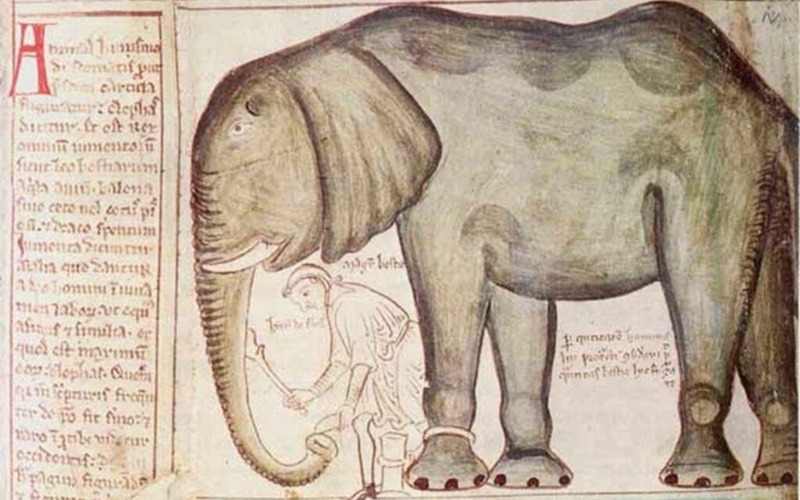
In medieval Europe, diplomatic gifts often took unusual forms. In 1255, French King Louis IX presented an elephant to King Henry III of England, following Louis’s return from the Seventh Crusade.
The animal, likely captured during military campaigns in the eastern Mediterranean, was transported by ship and overland before arriving in London. It was housed at the Tower of London, which at the time served as a royal menagerie displaying exotic animals gifted to the English crown.
Despite efforts to accommodate it, the elephant survived only a few years, likely due to climate and limited understanding of its care. To date, the gift stands as one of the earliest recorded examples of exotic animals being used in royal diplomacy.
Earlier, Qazinform News Agency reported about Santa Claus’ annual journey around the world.