Educational diplomacy and soft power in Kazakhstan: From beneficiary to benefactor
In a rapidly changing world, hard-power instruments are becoming increasingly obsolete. The international system is shifting toward cooperative approaches, where actors seek outcomes that are mutually beneficial rather than zero-sum. In this evolving architecture, soft power, rooted in attraction, credibility, and partnership, offers greater strategic leverage. It not only enables a state to shape preferences abroad but also creates tangible benefits for the recipients of its influence, Qazinform News Agency correspondent reports.
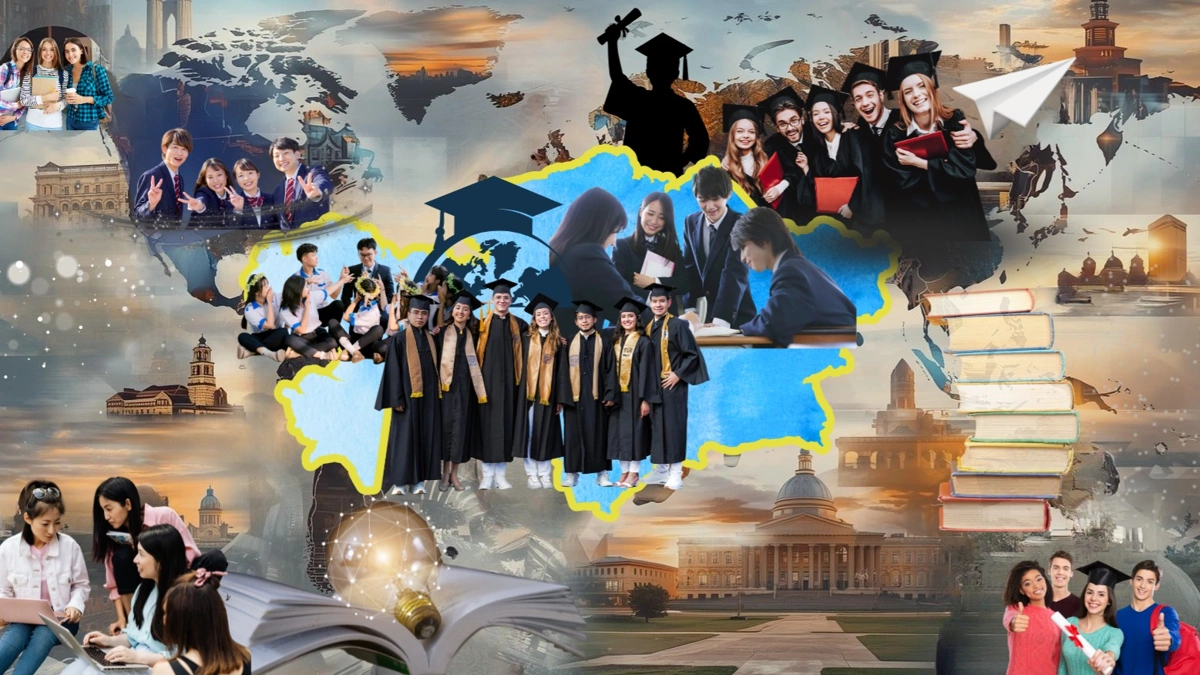
In the 21st century, countries increasingly specialize in distinct realms of soft power aligned with their comparative advantages: education, media, cultural production, humanitarian assistance, and scientific exchange. The United States, the European Union, and China are among the most prominent global soft power agents precisely because their economies and institutional ecosystems can sustain large-scale cultural and educational outreach.
Their competition for influence often takes the form of competing to provide - scholarships, development aid, research opportunities, cultural programs - creating a net benefit for the recipients. Flagship initiatives such as the Fulbright Program, Erasmus Mundus, and the Chinese Government Scholarship serve a dual purpose: they fund high-quality education for foreign citizens while simultaneously cultivating long-term affinity and aligning worldviews.
Kazakhstan as a former beneficiary of global soft power
For decades, Kazakh students travelled abroad for cultural exchanges, participated in foreign-funded academic programs, and absorbed external media influences. However, the trend is shifting. The country is increasingly demonstrating exportable value - a recognizable identity, growing cultural capital, and an emerging educational ecosystem with global relevance. These developments signal that Kazakhstan is beginning to shape, not just absorb, the global cultural and intellectual landscape.
Kazakhstan’s expanding presence in international media and entertainment is a notable example. Artists such as Dimash Kudaibergen and groups like Ninety One have generated global fan bases, inadvertently acting as cultural ambassadors who elevate the country’s visibility and shape perceptions abroad. Their global reach reinforces Kazakhstan’s identity by personalizing the culture for foreign audiences, generating emotional resonance, and nurturing curiosity about the country.
Yet, while entertainment contributes meaningfully, Kazakhstan’s most promising soft power instrument is educational diplomacy.
Educational diplomacy as Kazakhstan’s unique soft power tool
Educational diplomacy has been embedded in Kazakhstan’s statecraft since independence. The Bolashak Scholarship, launched in the 1990s, is a foundational example. By funding the country’s best students to study at leading global universities, Kazakhstan was not merely developing a skilled workforce - it was embedding Kazakh citizens into influential international networks, generating long-term soft power returns.
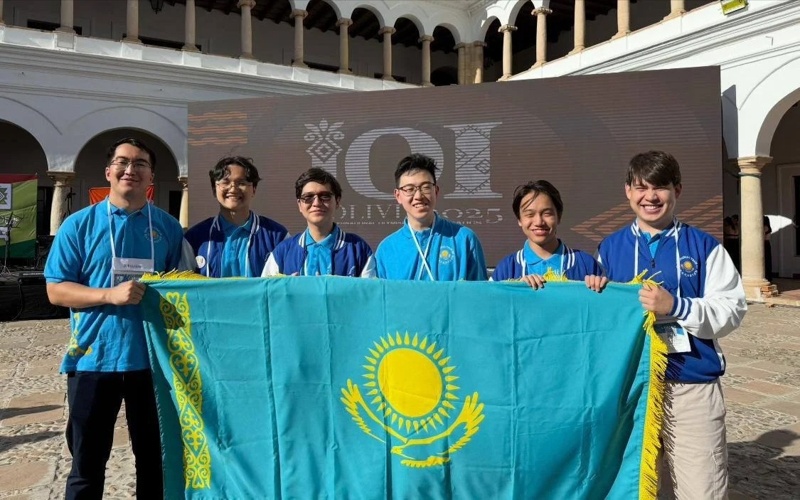
Studying abroad is an inherently soft power mechanism because:
- Students become cultural ambassadors. Their presence in international classrooms humanizes and personalizes Kazakhstan for peers and professors who may have had no prior exposure to the country.
- They transmit norms in both directions. Kazakh students learn global standards of governance, research, and professional practice, while simultaneously sharing local perspectives and correcting misconceptions.
- International peers form enduring affinities. Friendships, networks, and professional collaborations built during study abroad shape perceptions for decades.
- Many Bolashak graduates rise to influential positions. Their credibility, global networks, and cosmopolitan mindset allow them to represent Kazakhstan’s interests more effectively, while their foreign peers - future diplomats, academics, executives - carry positive associations with the country.
These dynamics illustrate why Bolashak is not only a human-capital program but also one of Kazakhstan’s earliest and most sustained soft power investments. Its cumulative effects become most visible when the former recipients and their peers begin to ascend into decision-making roles globally - a process already underway.
Examples of soft-power returns include:
- foreign researchers collaborating with Kazakh institutions because of personal ties formed through Kazakh peers abroad;
- international organizations consulting Kazakh experts who trained at top universities;
- increased visibility of Kazakhstan in academic, diplomatic, and professional ecosystems due to personal connections with its nationals.
In other words, Kazakhstan’s image travels wherever its students do.
Internationalization of higher education: Kazakhstan as an educational hub
Kazakhstan’s newer dimension of educational diplomacy involves bringing the world to Kazakhstan. Over the last several years, the government, championed by Minister of Science and Higher Education Sayasat Nurbek, has actively promoted the idea of Kazakhstan as a regional educational center. This strategy operates through two mutually reinforcing mechanisms:
1. Establishment of foreign university campuses
Around 30 foreign university campuses now operate in Kazakhstan, a dramatic rise compared to five years ago. Among them are Cardiff University, Sorbonne-Kazakhstan, University of Arizona, Heriot-Watt University, Université de Lorraine, TU Berlin, City University of Hong Kong, Queen’s University Belfast, Seoul National University of Science and Technology, MGIMO Astana, DeMontfort University, Beijing Language and Culture University, and others.

Foreign campuses serve as soft power channels in several ways:
- Credibility Transfer: Their presence signals trust in Kazakhstan’s institutional environment, enhancing the country’s reputation as a stable, academically serious, globally connected state.
- Network Creation: Faculty exchanges, joint degrees, and research partnerships embed Kazakhstan within global academic and professional networks.
- Influence Reciprocity: While Kazakhstan benefits from foreign expertise, the foreign universities’ reputation also becomes partially shaped by their success in Kazakhstan, thereby creating mutual dependence.
- Visibility: International faculty and students amplify Kazakhstan’s narrative through publications, conferences, professional circles, and social networks.
2. Attraction of international students
Today, Kazakhstan hosts over 35,000 international students, primarily from India, Turkmenistan, Uzbekistan, China, Russia, Turkey, Germany, and the United States. The government aims to increase this number to 150,000 by 2029, which would redefine Kazakhstan’s educational footprint in Eurasia.
Foreign students are a soft power asset because:
- They develop cultural and professional ties to Kazakhstan, shaping positive long-term perceptions.
- Some remain in Kazakhstan, contributing to the local economy, workforce diversification, and internationalization.
- Those who return home become informal ambassadors, often occupying influential roles in medicine, engineering, public policy, or business.
- Their presence globalizes local universities, raising standards, stimulating competition, and increasing visibility.
This trend is particularly timely given that Russia, historically the primary educational hub in the post-Soviet space, has deprioritized hosting foreign students, creating a regional vacuum that Kazakhstan is well-positioned to fill.
From beneficiary to soft power benefactor
Kazakhstan today stands at a unique juncture. After decades of absorbing external soft power influences, it is now producing its own, rooted in education, culture, and the country’s evolving global identity. The deliberate efforts of the government, particularly Minister Sayasat Nurbek, have laid a foundation for leveraging educational diplomacy as a strategic soft power instrument.
With around 30 foreign university campuses, more than 35,000 international students, and a clear trajectory toward becoming a regional academic hub, Kazakhstan is shifting from passive recipient to active provider of soft power. Educational diplomacy is fundamentally an investment - one that yields returns not through immediate geopolitical gains but through the slow, steady accumulation of influence, credibility, networks, and goodwill.