
Board of Peace: Kazakhstan’s strategic role and Gaza reconstruction in focus
As President Kassym-Jomart Tokayev travels to Washington to participate in the first Board of Peace meeting, attention is turning to Kazakhstan’s contribution to the initiative. In an interview recorded by Silk Way TV Channel, Yezid Sayigh, Senior Fellow at the Malcolm Kerr Carnegie Middle East Center, and Iskander Akylbayev, Chief Executive Officer of Xander Group, discussed the initiative’s prospects and broader geopolitical implications, Qazinform News Agency reports.
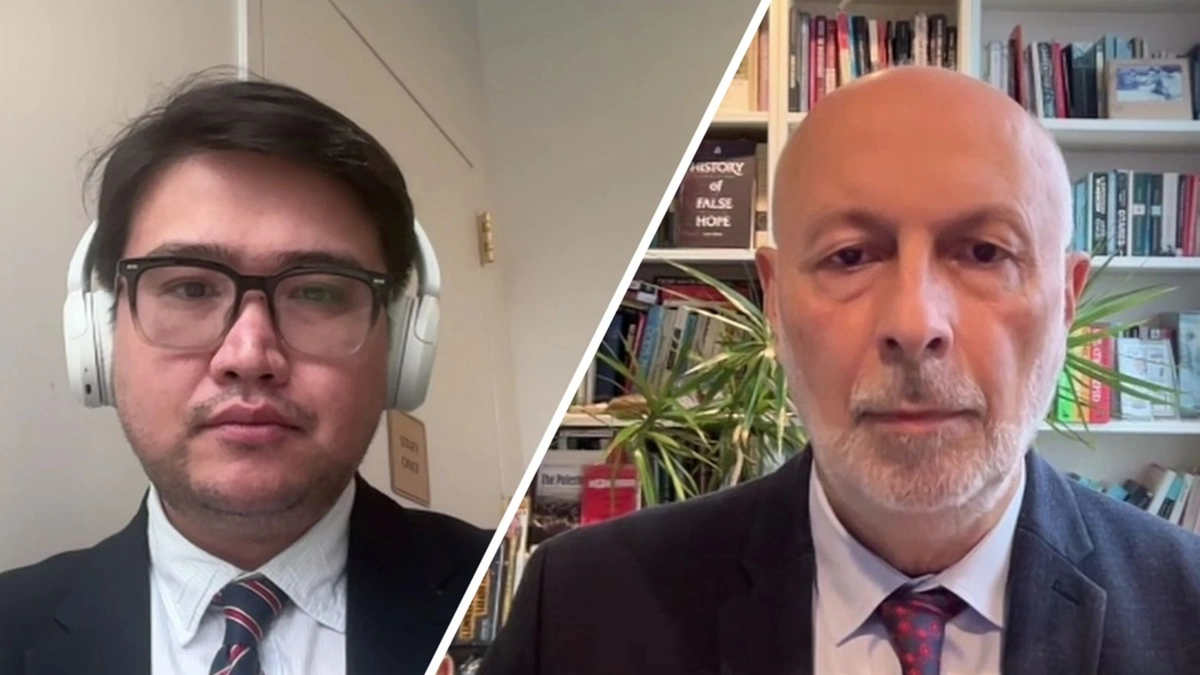
Mr. Sayigh, the US has presented its vision of Gaza, but there are still harsh realities on the ground. One million people are in need of shelter and dependent on aid. Now, with the first inaugural meeting of the Board of Peace taking place in Washington, I’m interested in how you view this newly formed platform: is it a genuine peace effort, or something broader in scope, given plans to expand beyond Gaza?
— It’s a very good question, because it raises several dimensions. I think it is useful that the Board of Peace has a primary focus on reconstructing Gaza, thereby enabling the withdrawal of Israeli forces from almost the entirety of the territory - that is its overall goal. The real challenge is whether we will see the kind of political investment from the U.S. President needed to push back against Israeli resistance.
So far, Israel has not, for instance, allowed several of the conditions that were supposed to have already been implemented in the first phase, such as the free movement of people in and out of Gaza, the resumption of full international aid, and so on. So, there are already several problems in implementation.
That said, I’ll end on a slightly more positive note: I am struck that President Trump has maintained enough energy and momentum, insisting on moving to phase two, which would necessarily involve deploying an international stabilization force on the ground in Gaza.
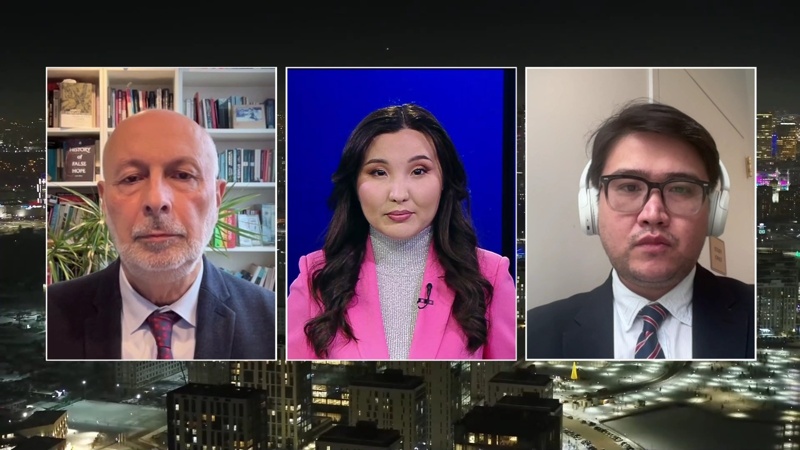
Iskander, let’s talk about the member countries of the Board, among which is also Kazakhstan. With President Kassym-Jomart Tokayev attending the inaugural meeting as well, what does this say about Kazakhstan’s role in making this initiative a solid foundation for a global peace-making mission? Can we see concrete signals that could support such an assessment?
— Speaking about the Kazakhstan experience, it’s not a random event, so President Tokayev’s presence at the inaugural peace forum meeting is not symbolic, it’s strategic. The fact that Kazakhstan is on the Board reflects confidence in its ability to operate across divides, East and West, Global North and South, major and middle powers. The concrete signals are threefold, in my opinion.
The first is institutional credibility. Kazakhstan has repeatedly delivered neutral venues and sustained diplomatic processes. Second is a presidential level commitment, which elevates the initiative from technical form to a political one. Third is the consistency. This aligns with Kazakhstan’s broad foreign policy doctrine of multi-vector engagement and preventive diplomacy. Together, I think this makes Kazakhstan a stabilizing power in turning these initiatives into durable peacemaking architecture, not just one event.
Mr. Sayigh, key U.S. allies, alongside India and China, have not formally signed on. However, with Italy attending as an observer and the EU sending representation for this meeting, are we seeing hesitation or the early stages of broader buy-in, do you think?
— I think that the current composition of the Board of Peace, if you look at which countries have joined and which have explicitly refused to join, declined the invitation, which may have not given a clear view. I don’t think the final picture will differ much.
I think there’s a lot of worry, for instance, among European governments that the Board of Peace threatens the status of the United Nations. I think that there’s also, of course, reluctance in Russia and China to endorse what the Trump administration is doing, generally, in Gaza.
So it’s not going to change, you think?
— I don’t think there’ll be any significant change. What’s significant is what we’ve already seen, which is that a few Muslim majority countries like Indonesia and Pakistan have joined. Four Arab countries have joined. And of course, your country and a few others have joined as well, along with Israel. And Israeli Prime Minister Benjamin Netanyahu will attend tomorrow. So I think this very much tells us about politics.
Iskander, many states joined under the assumption this advances a two-state solution. How much of that is it realistically deliverable? And what, other than this, has got to happen first for peace to become something tangible rather than abstract?
— This is a very difficult but at the same time sensitive point. The two-state solution remains an international reference point, but it cannot be treated as a slogan on its own. It’s not immediately deliverable. So in this respect, I think for the peace to move from abstract to tangible, several things must happen first. Number one is security and governance realities must be addressed. Without credible security guarantees and accountable governance structure, no political solution can evolve.
Secondly, regional buy-in is essential. Peace cannot be imposed bilaterally. It must be embedded in a wider regional framework involving key neighboring and global actors. Third, I believe that economic and human foundation matter. Reconstruction, mobility, dignity, daily stability are prerequisites for the political agreements to survive.
These initiatives should be judged not whether it solves the conflict immediately, but whether it rebuilds trust, restores dialogue, and creates conditions under which political solutions, including two states, become viable again. I believe that basically peace is not an event, it’s a process, and processes require platforms that are credible, inclusive, and patient. That’s where this initiative can make a real difference.
Previously, Qazinform News Agency reported President Kassym-Jomart Tokayev of Kazakhstan is attending the first meeting of the Board of Peace.