Aqzhan – “Pure Soul” - a cultural phenomenon of the Great Steppe
They say that nowhere in the world is the sky quite like the one above Astana. It is here, where endless steppes once stretched and where today skyscrapers rise into the sky of Kazakhstan’s modern capital, that the mare Aqzhan was born. She is the daughter of purebred Akhal-Teke horses Gauntly and Tabys - a true treasure of the nation’s breeding heritage.
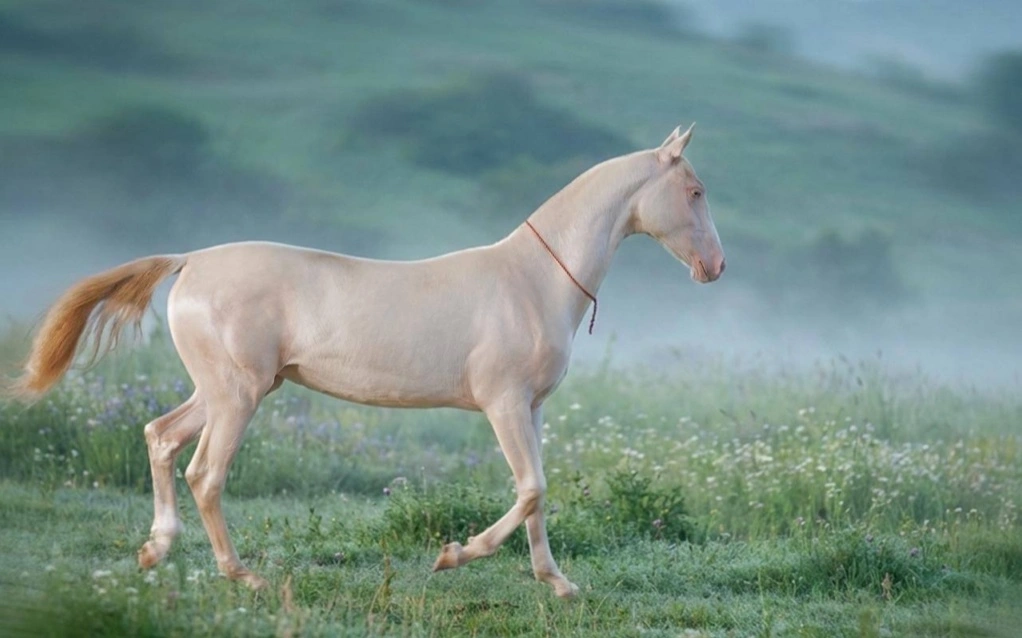
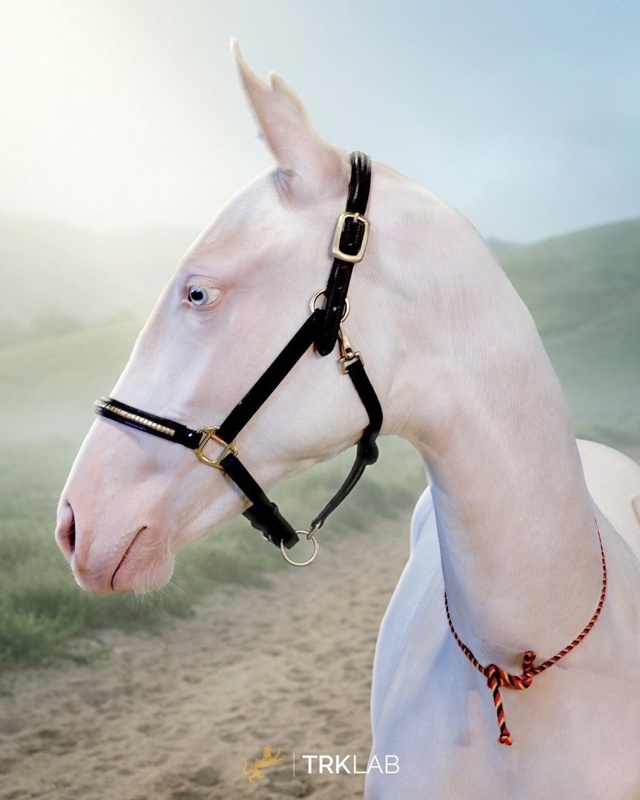
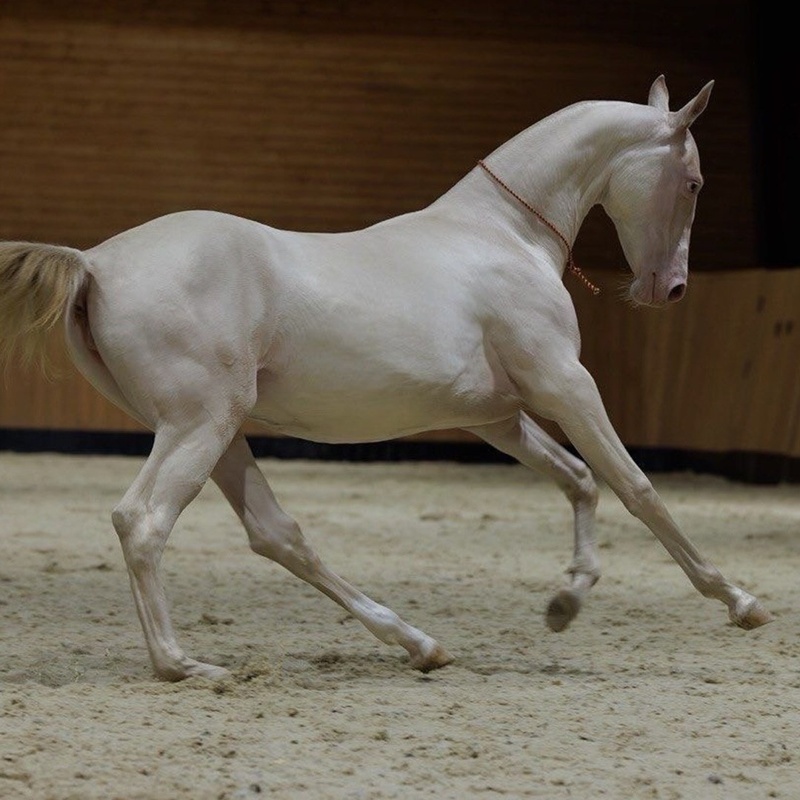
Aqzhan belongs to the rare isabelline coat color. Her hair creates an optical effect: the finest strands refract light, produce a satin-like, almost otherworldly shine. In steppe culture, an isabelline horse has always been regarded as a good omen, a herald of luck and prosperity. And it is no wonder, since this coat color is rare even among Akhal-Tekes.
As cultural scholar Assel Nikambekova notes, for the Kazakh people the horse has never been just an animal, but rather the foundation of civilization, a companion in nomadic life, a source of strength and inspiration.
“When it comes to symbols that define statehood, ancient Turkic mythology predominates. Kazakh culture has passed through historical periods of both nomadic and settled life. The ‘cult of the horse’ became the central symbol of Kazakh culture in the archaeological complex of the Botai culture and the works of Serikbol Kondybai,” says the solar.
In his work “Introduction to Kazakh Mythology” Serikbol Kondybai introduces the term ‘mythical argmak’. He highlights that the horse is the principal defining factor of nomadic civilization.
“In the customs and traditions of our people, horses were used to name celestial bodies, measure time, and conduct healing rituals. I believe that the most valuable aspect of the horse in Kazakh mythological consciousness is its connection to statehood, the defense of the Motherland, and the unity of the people. In the works of Ilyas Yessenberlin (The Golden Horses Awaken), Mukhtar Magauin (Zhuirik), and Akseleu Seidimbek (The Kazakh World), it is emphasized that the horse is the golden pillar in the system of moral and ethical values of the Kazakh people,” says Assel Nikambekova.
It were the Kazakhs - descendants of the ancient tribes of Central Asia - who became the first to saddle a horse. Archeological finds of the Botai culture, dating back to the 4th millennium BCE, provide compelling evidence: it was in the territory of modern Kazakhstan that humans first domesticated the horse, began to ride it, and use it for household needs.
This discovery became a turning point in human history, altering the course of evolution and the development of civilizations. No other animal has exerted such a powerful influence on humanity. The horse gave people speed and mobility, enabled them to expand horizons, engage in trade, wage military campaigns, and unite vast territories.
Petroglyphs and rock carvings found in the mountains of Kazakhstan depict scenes of hunting, rituals, and warfare, where the horse always occupies a central place. These ancient drawings are a kind of chronicle, showing that the horse was an inseparable part of the life of the steppe peoples, their mythology, and worldview.
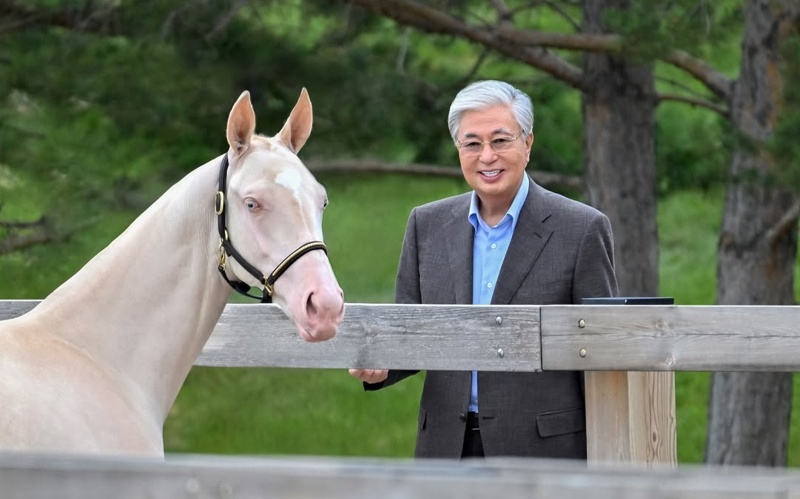
Aqzhan, heir to ‘heavenly horses’ and direct descendant of the Akhal-Tekes, becomes a living continuation of this millennia-old tradition. In her image, ancient symbols carved in stone merge with the modern values of urban culture. She reminds us that the horse is not merely an animal, but a companion of humankind on its path to civilization, a symbol of harmony between nature and society.
That is why Aqzhan is perceived not only as a rare beauty but also as a cultural phenomenon, capable of becoming a new symbol of Astana, uniting the legends of the past with the aspirations of the present.
The name Aqzhan, translated as ‘Pure Soul’, becomes an important symbolic landmark, carrying not only poetic resonance but also profound cultural meaning tied to the ideas of purity of thought, legality, and respect for social order.
In the context of the rapid development of modern cities and society as a whole, this image acquires particular relevance: it reminds us that the true strength of megacities lies not only in architectural achievements and economic growth, but also in the moral values shared by their inhabitants.
Aqzhan embodies the striving for order and justice, respect for common space. In her name, ‘Pure Soul’, lies a call to build the future on the foundation of trust and mutual respect.
For Kazakhstanis, this is especially important: in a society where hospitality and openness are valued, purity of soul becomes not merely a personal trait but a social idea.
In this sense, the image of Aqzhan becomes a kind of mirror of public expectations, reflecting the aspiration for harmony, for a just pure future where values matter more than external attributes.
Aqzhan is not simply a heavenly horse of the Great Steppe, but a cultural phenomenon that helps modern Kazakhstani citizens realize the importance of purity of thought, legality, and respect for public space.
Her name becomes a metaphor for a new stage in the development of society, where civic responsibility and moral guidelines play a key role in shaping urban identity and national consciousness.
Residents actively discuss the image of young Aqzhan on social media, sharing photographs and comments. This testifies to the fact that she is perceived as a ‘native’ symbol - close and understandable to people, forming an emotional bond with the city.