“Strategic alignment” - Uzbekistan political expert on Kazakhstan’s reforms and Central Asia’s modernization
Recent political and constitutional reforms in Kazakhstan are drawing attention not only domestically, but also from abroad, as they are increasingly seen as shaping the trajectory of regional development. In an exclusive interview, Akramjon Ne’matov, First Deputy Director of the Institute for Strategic and Interregional Studies under the President of the Republic of Uzbekistan, told Qazinform News Agency about the growing alignment of Kazakhstan’s and Uzbekistan’s modernization strategies and their impact on Central Asia’s sustainable growth.
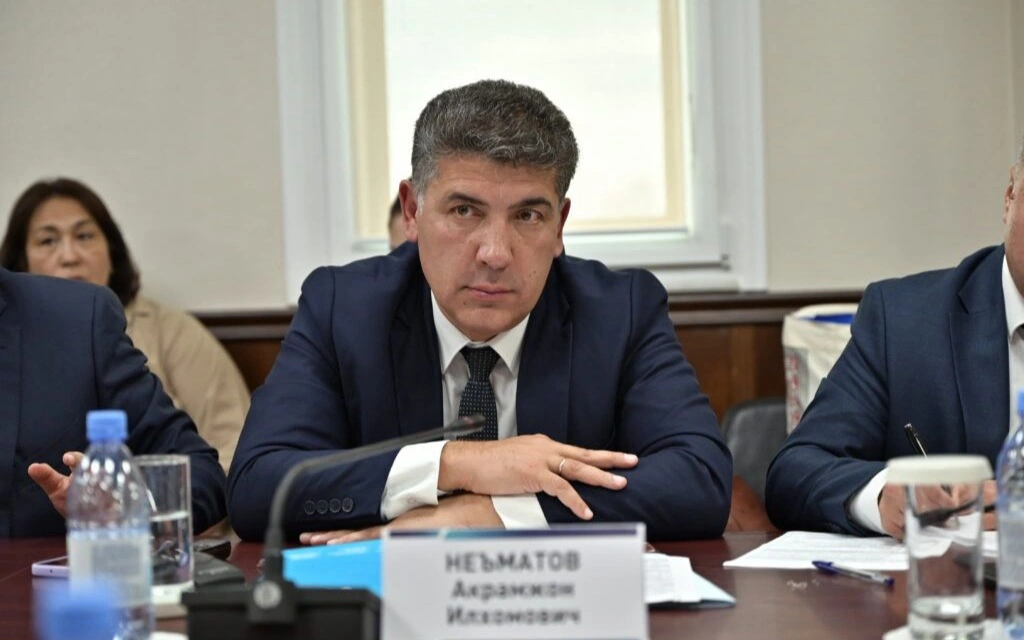
Ne’matov noted that one of the defining features of Kazakhstan’s current trajectory is the consistent promotion of a comprehensive modernization agenda encompassing public consciousness, state institutions and the economic system.
“This approach becomes particularly relevant in a turbulent international environment, where one of the main factors of resilience is a state capable of formulating and implementing long-term development priorities. In this context, Kazakhstan’s course sets a significant vector not only for national development, but for the entire Central Asian region.
Countries of the region largely face similar structural challenges, including dependence on raw materials, technological lag, as well as demographic and climate-related risks. Therefore, modernization processes deliver the greatest effect precisely when national strategies are aligned at the regional level,” Ne’matov said.
He emphasized that Central Asia’s overall potential remains substantial, citing Uzbekistan’s recent economic performance as an illustration. By early 2026, Uzbekistan’s gross domestic product exceeded $145 billion, while exports reached $33.4 billion.
According to Ne’matov, both Uzbekistan and Kazakhstan are now consistently transitioning from a predominantly quantitative growth model to a qualitative development path based on knowledge, technology and innovation.
He also highlighted the importance of the political course pursued by President of Uzbekistan Shavkat Mirziyoyev, noting the systemic and consistent nature of the reforms being implemented.
“Political will and the systemic character of the reforms initiated have ensured stable economic growth, intensified institutional transformation and laid a solid foundation for the transition to a new development model focused on improving quality of life and advancing human capital,” Ne’matov said.
According to him, the reforms underway in Uzbekistan are comprehensive and long-term in nature, covering economic, social and governance spheres, and already have a positive impact that extends beyond the country’s borders.
“The transformations being carried out in Uzbekistan are comprehensive and long-term, encompassing economic, social and governance spheres, and are already having a positive impact not only on the country’s internal development, but also on the overall dynamics of regional processes. In this context, Uzbekistan’s modernization course serves as one of the key factors strengthening the resilience and interconnectedness of Central Asia,” he noted.
Ne’matov also pointed to the importance of value-based convergence between Kazakhstan and Uzbekistan, as well as to a set of priority areas for deeper regional cooperation. These include technological and innovative development, human capital formation, environmental sustainability and climate adaptation, transport and logistics connectivity, digitalization and artificial intelligence, as well as cultural and humanitarian interaction.
“In conclusion, I would note that the consistent modernization of Kazakhstan and Uzbekistan is forming a solid foundation for the sustainable growth of the entire Central Asian space. With systematic alignment of these efforts, the region is capable of strengthening its international standing, enhancing investment attractiveness and increasing resilience to external shocks. In this case, modernization is not merely a political choice. For Central Asia, it represents an objective path toward more effective regional cooperation, sustainable development and social progress,” Ne’matov concluded.
Earlier, Qazinform News Agency shared why South Korean expert Minhyeon Jeong believes that Kazakhstan’s ongoing political reform matters.