Safeguarding history: How national heritage is preserved in the Arctic
The national symbols of Kazakhstan were first placed in the Arctic World Archive (AWA) in 2021, which has since raised broader questions about how statehood, identity, and historical memory can be protected in the digital age. To find out more, Qazinform News Agency interviewed the AWA to learn how Kazakhstan’s national symbols are stored in the Arctic, why this location was chosen, and whether Central Asia’s heritage may be expanded in the collection in the future.

What data from Kazakhstan and other Central Asian countries are currently stored in the Arctic World Archive? How were these materials added to the archive: were they provided by national archives, museums, universities, or private organizations?
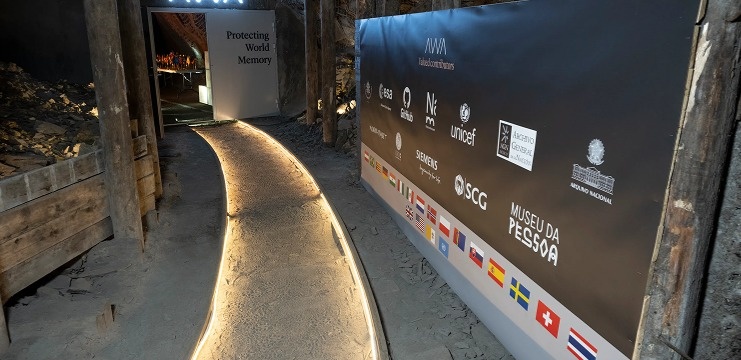
The Arctic World Archive (AWA) is a repository for World Memory that now has more than 100 deposits from 85+ institutions from 30+ countries from all over the world. Amongst them are the Vatican Library, the European Space Agency, various national archives, libraries, museums.
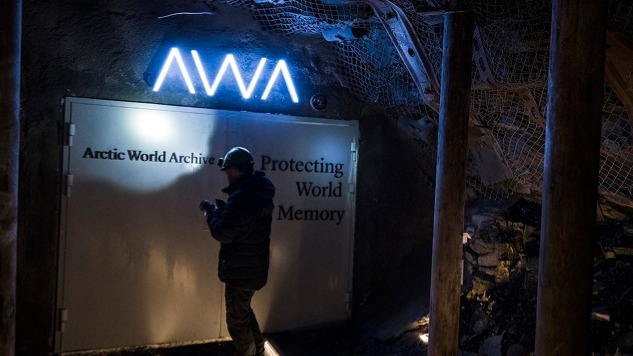
The secure AWA vault is located in the center of the permafrost in an Arctic mountain on the Svalbard Archipelago that sits in the middle of the Arctic Ocean, between the top of Norway and the North Pole. AWA was developed to ensure the world’s digital memory will be available for future generations - and will never be lost, in a world where few places are safe from natural and man-made disasters.
Data from Kazakhstan currently stored in the Arctic World Archive consist of digitized files of the national symbols of the Republic of Kazakhstan. These materials were provided and deposited by the Ambassador of the Republic of Kazakhstan to Norway during an official visit to Svalbard.
Do these include any documents or digital collections that represent the historical or cultural heritage of the region (for example, manuscripts, archival photographs, literary works, or scientific research)?
AWA is for digitized or digitally born heritage, valuable information, and memories that are of importance for the world, regions, nations, institutions, and organizations, as well as people. The deposited materials represent key elements of Kazakhstan’s historical and political heritage and include:
● the State Flag of the Republic of Kazakhstan;
● the State Emblem of the Republic of Kazakhstan;
● the National Anthem of the Republic of Kazakhstan;
● the Constitution of the Republic of Kazakhstan;
● the Law on State Independence of the Republic of Kazakhstan (dated 16 December 1991).
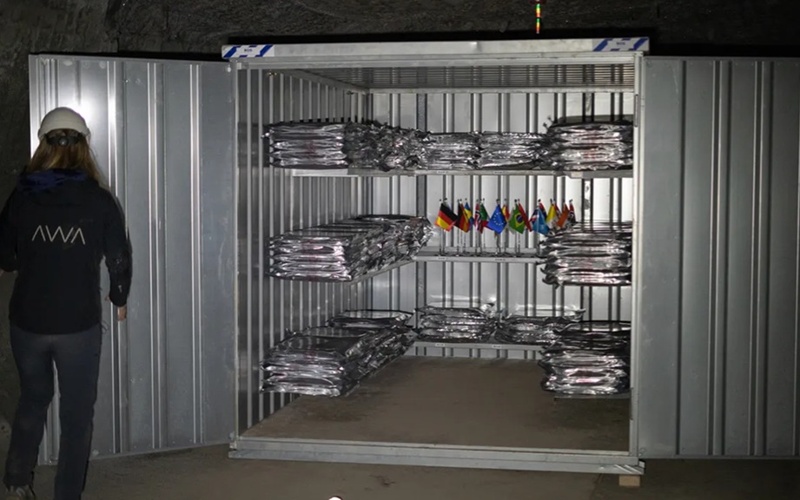
Prior to storage, the materials were digitized and archived using Piql’s proprietary long-term preservation technology, designed to ensure secure and durable data storage for future generations. Given the unique natural conditions of this vault, it is a completely sustainable data vault with a perpetual time perspective. No energy is needed to keep the data alive for centuries and millennia. An important fundament for AWA is Piql’s disruptive storage technology that ensures “eternal life” for what is deposited.
This technology has some unique characteristics:
● Completely migration-free and self-descriptive
● Has a longevity of data up to 2000 years (when stored in AWA)
● Immune to cyberattacks and digital threats
● Non-hackable and inherently immutable - data cannot be deleted or overwritten
● Non-electronic and non-magnetic
● Immune to electromagnetic and radioactive radiation
● Where data is stored offline and off-grid, but where data can be made accessible online within a short timeframe, and that at the same time is the most environmentally friendly storage option, characterized by the lowest carbon footprint over time.
Are there any rare or unique materials in the collection related to the traditional culture and languages of the peoples of Central Asia? Does the Arctic World Archive plan to expand its collection with materials from Kazakhstan and Central Asia in the near future?
At present, this is the only deposit from Central Asia held in the Arctic World Archive, and it consists exclusively of Kazakhstan’s state symbols. However, the Arctic World Archive remains open to collaboration and is committed to supporting the preservation of the cultural, historical, and documentary heritage of the peoples of Kazakhstan and Central Asia in the future.
Earlier, Qazinform News Agency reported that a new seven-volume history of Kazakhstan is set to be finalized by yearend.