Kazakhstan’s development model demonstrates rising global risks can be converted into period of sustainable growth – Dr. Hassan Daud
Amidst the global uncertainty, Asia presents a contrasting picture and countries like Kazakhstan offering one of the most compelling regional examples of how an adaptive development pathway can be strategically designed and implemented, Dr. Hassan Daud told Qazinform News Agency.
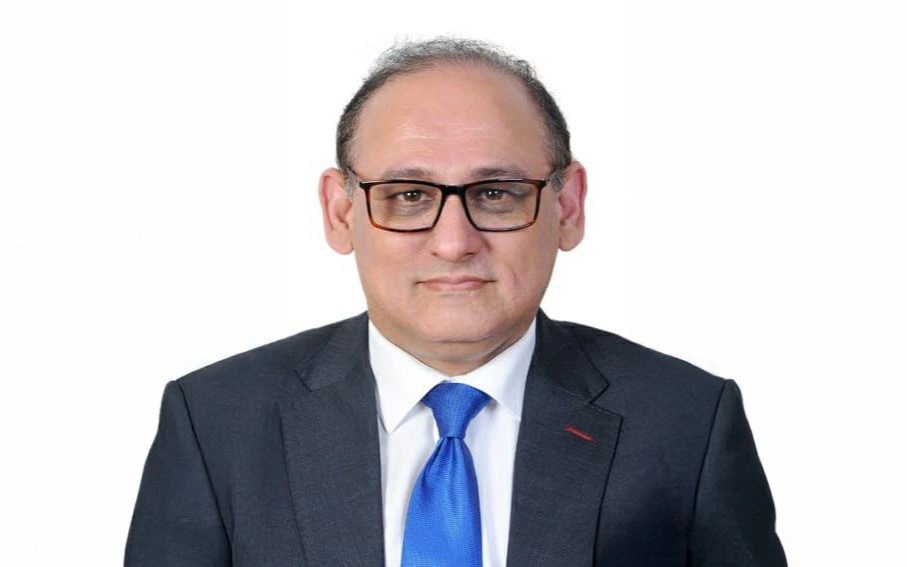
“Located in the center of Eurasian Trade Routes, Kazakhstan has positioned itself as a major hub and key facilitator of economic integration throughout the region. Kazakhstan has been implementing a comprehensive and holistic developmental path set forth by President Kassym-Jomart Tokayev. This vision is designed to enhance economic opportunity and diversify industrial growth, create employment and increase the rate at which new technologies are adopted; and ensure that the development process results in broad-based inclusive growth for the entire population,” notes the expert.
This approach, in his words, is relevant as Kazakhstan has made substantial investments on physical connectivity and in modernizing the existing transport networks, as well as constructing new ones to facilitate its internal development and international trade. Kazakhstan is also enhancing connection with the neighboring Central Asian countries like Uzbekistan and Kyrgyzstan via logistic hubs and corridor projects to multiply the trade flows, enhance regional connectivity, and make businesses less expensive. According to the national railway, Kazakhstan Temir Zholy (KTZ), over the last few years approximately more than 1,400 km of track has been repaired, and at present about 1,000 km of new railway lines are being built, including the Dostyk-Moiynty, Darbaza-Maktaaral, and the Almaty bypass, to better connectivity. The upgrades are included in larger plans, which might result in an increase of transit volumes from 33 million tons estimated in 2025 to over 67 million tons in 2029, with a further projection of 100 million tons by the year 2035, contributing to the image of Kazakhstan as a central transit point between East and West.
“Rather than retreating into protectionism, Kazakhstan is opening up to investments and advancing deeper economic integration through trade agreements, logistics connectivity, and coordinated industrial strategies, reshaping value chains and strengthening resilience against global shocks. The level of international investment into the economy of Kazakhstan has surged with foreign international enterprises interested to invest in a variety of sectors such as energy, transport, technology, and infrastructure. Kazakhstan is focused on strengthening its economy and increasing economic diversity through investments in infrastructure. The key component of Kazakhstan's response to global uncertainty is the development of resilience, diversification and industrial depth within the framework of the country's economic planning through the establishment of a network of Special Economic Zones (SEZs), which have been incorporated into the construction of Kazakhstan's sustainable industrial growth strategy,” he highlights.
According to Dr. Daud, Kazakhstan's implementation of its SEZs also serve as the foundation for the country's overall regional development strategy, through their centrality to transitioning to value-added production, export-orientated and technology-based growth. To date, the cumulative investment made into the 16 SEZs in Kazakhstan has exceeded 10 trillion tenge (approximately $19 billion USD) and is responsible for more than 33,000 new jobs, thus establishing these zones as a central feature of the continued structural transformation of Kazakhstan's economy. In addition to advancing industrial activity, SEZs are also rapidly becoming regional hubs for logistics and transport services, as numerous projects have supported Kazakhstan's growth into an increasingly important gateway and processing/distribution network between Europe and Asia, through investment in rail expansion projects, dry port facilities, bonded warehouse facilities, logistics parks, etc.
“In addition to this industrial foundation, the Astana International Financial Centre (AIFC) has become a major tool of financial diversification and mobilization of investments, working on a regular, internationally consistent regulatory framework. The AIFC can help overcome structural and governance limitations in SEZ management through a pragmatic and investor-friendly legal framework, as well as a tiered incentive scheme. Its framework is beneficial not only to licensed companies in financial and professional services but also to foreign professionals and investors, making Kazakhstan more appealing to the capital and talent of the world. Combined with the twin-track approach, this helps sustain long-term stability, competitiveness, and more general economic transformation,” the expert underscores.
In essence, through these projects, the expert believes that Kazakhstan has fast transformed itself from a landlocked/ peripheral economy into a significant international connector within the regional supply chains of Europe and Asia. Just like the newly created logistics and manufacturing zones, Kazakhstan is also developing innovation-driven zones like Almaty (Park of Innovative Technologies, Astana Technopolis, and Alatau) to enhance existing innovation capabilities, develop a skilled labor force, and sustain long-lasting competitiveness through supporting the development of ecosystems in IT, electronics, bioengineering and renewable energy and commercialization of research conducted in Kazakhstan. Policy emphasis has increasingly shifted toward deepening and upgrading existing industrial zones rather than expanding their number.
“Simultaneously, the country is pursuing a strategic energy transition to strengthen energy security and reduce carbon intensity. Coal still accounts for nearly two-thirds of electricity generation, prompting the government to approve the country’s first nuclear power plant following a nationwide referendum in October 2024, alongside a rapid scale-up of renewable energy projects. Together, these initiatives aim to raise renewables to fifteen percent of Kazakhstan’s electricity mix by 2030, quintupling their share from 2023 levels,” he says.
Importantly, according to him, this rapid progress has been supported by a series of targeted institutional reforms aimed at positioning Kazakhstan as a predictable and investor-friendly jurisdiction. The government streamlined investment governance and strengthened investor protection mechanisms, expanded arbitration and dispute-resolution options, and improved regulatory transparency across priority sector in creating pull factor. Parallel to domestic reforms, Kazakhstan pursued proactive economic diplomacy, embedding investment promotion into its foreign policy through bilateral investment treaties, strategic partnerships and active engagement with multilateral platforms. High-level roadshows, sovereign investment forums, and sector-specific investment missions complemented these efforts.
“Overall, Kazakhstan’s development model demonstrates that through inclusive growth, economic resilience, regional integration, and strategic investment, times of rising global risks and deepening economic fragmentation can be converted into period of sustainable growth. It also provides important insights for Central Asian and other developing economies looking to diversifying their economic base, bolster manufacturing capacity, and turn uncertainty into opportunity. As a hub for industrialization and through institutional reforms, diplomatic, and promotional measures, Kazakhstan from a resource-dependent economy has transformed into a recognized regional gateway for capital, talent and long-term investment. Kazakhstan's model demonstrates that by utilizing the demographic advantages, youthful labor force, and international collaborations, developing nations can make the transition to an industrialization-based economy thereby fostering long-term prosperity and economic stability,” he concludes.
Earlier, Qazinform News Agency shared thoughts of Armenian expert Gevorg Melikyan who thinks Kazakhstan’s constitutional reform is a driver of institutional stability and regional trust.