Beyond statistics: How the world is changing the fight against cancer
On the day of World Cancer Day, marked annually on February 4, Qazinform News Agency examines global cancer trends, recent advances in treatment, and national efforts to reduce mortality, highlighting both persistent challenges and measurable progress in cancer care worldwide.

World Cancer Day was established in 2000 at the World Summit Against Cancer for the New Millennium in Paris and has since been led by the Union for International Cancer Control (UICC). The initiative aims to promote research, raise awareness and mobilise global action across prevention, early detection, diagnosis, treatment and long-term care.
The 2025-2027 World Cancer Day “United by Unique” campaign highlights people-centred care, recognising that every cancer diagnosis is defined by individual medical, emotional and social needs. The campaign aims to underscore the importance of integrating these factors into health systems and policy decisions.
“Cancer is more than just a medical diagnosis - it’s a deeply personal matter. Behind every diagnosis lies a unique human story - stories of grief, pain, healing, resilience, love and more. That’s why a people-centred approach to cancer care that fully integrates each individual’s unique needs, with compassion and empathy, leads to the best health outcomes,” the World Cancer Day organization said.
Globally, cancer remains one of the leading causes of death, accounting for one in six deaths and affecting about 20 million people worldwide, yet long-term trends indicate steady improvements in outcomes in several regions. Today, advances in screening, declining smoking rates, and the expansion of targeted immunotherapies have contributed to falling mortality rates.
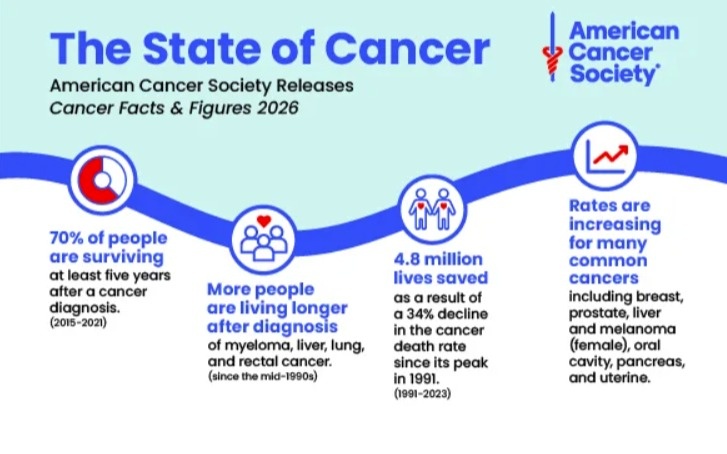
In the United States, five-year survival rates have increased to 70% for patients diagnosed between 2015 and 2021, compared to 63% in the mid-1990s. Progress has been recorded even in high-mortality cancers such as advanced lung cancer, metastatic melanoma, liver cancer and myeloma. Despite this, lung cancer remains the deadliest form, causing more than twice as many deaths as any other cancer. Projections for 2026 estimate 2.1 million new cancer cases and 626,000 deaths nationwide.
In Japan, survival outcomes vary significantly by cancer type, according to data covering nearly 990,000 patients diagnosed in 2016. Prostate cancer recorded the highest net survival rate at 92.1%, while pancreatic cancer had the lowest at 11.8%. Breast cancer survival stood at 88.0%, bowel cancer at 67.8%, stomach cancer at 64% and lung cancer at 37.7%. Among children under 15, survival rates exceeded 95% for lymphocyte and lymphoreticular tumors.
Despite the rising global burden, the past year has also seen notable scientific and clinical breakthroughs. In Australia, researchers launched a world-first clinical trial using personalised mRNA vaccines to treat children and adolescents with advanced or treatment-resistant brain tumours. The process is currently underway across eight paediatric hospitals and focuses on tailoring vaccines to each patient’s tumour profile through genome sequencing.
In Brazil, clinical trials are underway for the MasSpec Pen, an AI-powered surgical device that identifies cancer cells in real time. Tested in São Paulo, the technology analyses tissue using mass spectrometry and artificial intelligence, delivering results in about 90 seconds and showing accuracy above 96% in multiple cancer types.
In India, scientists introduced an artificial intelligence-based system designed to transform cancer diagnosis and treatment planning. By analysing millions of individual cancer cells across multiple tumour types, the system enables clinicians to assess the molecular behaviour of a tumour rather than relying solely on its size or stage. Researchers say the approach allows for earlier identification of aggressive cancers and more personalised therapy selection.
“Cancer is not just a disease of growing tumors - it is powered by a set of hidden biological programmes called the hallmarks of cancer. These hallmarks explain how healthy cells turn malignant: how they spread, evade the immune system, and resist treatment,” India’s Ministry of Science and Technology said.
In Kazakhstan, cancer care has undergone significant transformation in recent years, with measurable improvements in both treatment capacity and outcomes. The country has begun treating patients with proton therapy, one of the most advanced forms of radiation treatment, which reduces radiation exposure to healthy tissues by 60-70% compared with conventional methods.
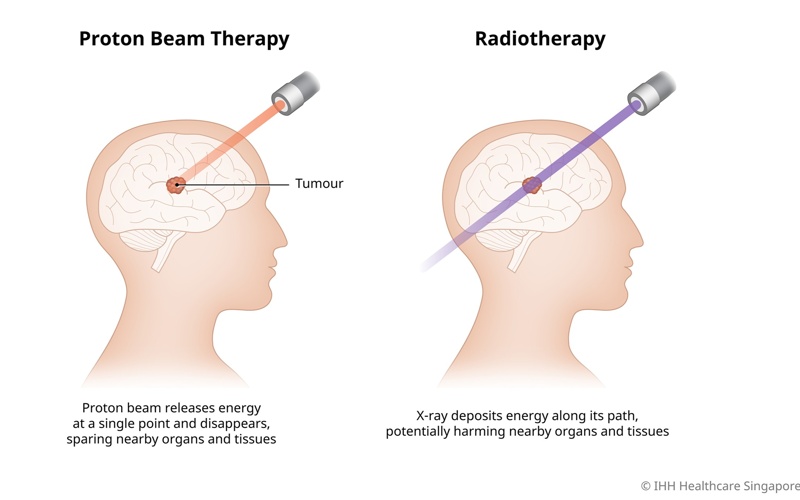
“Proton therapy is used at all stages of cancer, but it is especially effective in treating children due to their growing bodies, as well as in cases of recurrence after previous radiation therapy. As cancer tissues develop radioresistance, protons and their high precision of delivery allow the required dose to be directed to the tumor while minimally affecting previously irradiated structures and reducing the risk of severe complications,” said Alua Kanatkyzy, senior medical physicist at the National Scientific Oncology Center.
According to the Health Ministry, Kazakhstan’s overall cancer mortality rate has declined by 20% over the past five years, falling to 61 cases per 100,000 people. These results are linked to the implementation of the Comprehensive Plan to Combat Cancer for 2023-2027, which prioritises early detection, expanded access to modern therapies and infrastructure upgrades.
In 2025, up to 42,000 new cancer cases were diagnosed nationwide, an increase of 7.8% compared to the five-year average, largely due to improved screening and diagnostics. More than 246,000 patients are currently under active monitoring, with over half of them of working age. Five-year survival rates now exceed 63%, while early detection rates have surpassed 33%.
The oncology system has received 30.4 billion tenge ($60,6 million) in funding, enabling the commissioning of new linear accelerators, PET/CT centres, expert endoscopy units and expanded access to targeted and immuno-oncology medicines. Kazakhstan has also strengthened international cooperation and specialist training, while nationwide screening programs now cover uninsured populations. It is also important to note that this year the country is set to launch AI-supported lung cancer screening.